
TURBD

Turbidity is an optical measurement of water clarity, which can be a proxy for the amount of suspended particles. It can be quantified by looking at the amount of light scattered. The OOI turbidity instrument measures 700 nm backscatter in Nephelometric Turbidity Units (NTUs).
Read MorePRTSZ
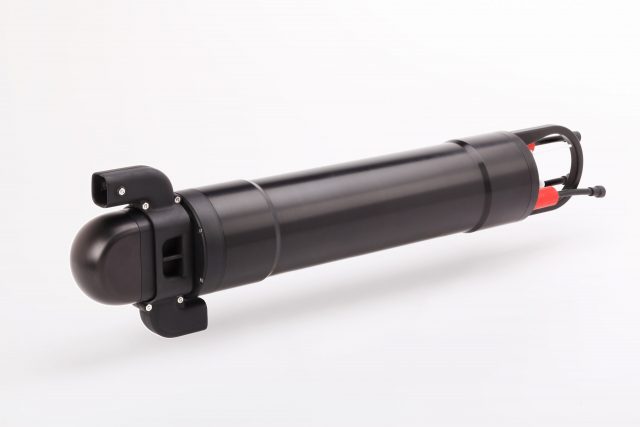
It is now possible to measure particle at the Coastal Pioneer Mid-Atlantic Bight Array using a self-contained submersible laser diffraction particle size analyzer, designed for measuring suspended particle size and concentration in the ocean. A fast response temperature sensor and a high-resolution depth sensor makes it suitable to be used in both profiling or towing.
Read MorePLIMS
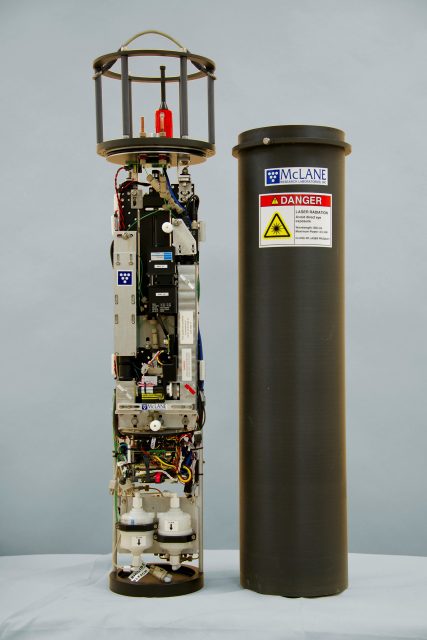
OOI captures images of plankton using an Imaging FlowCytobot (IFCB), an in situ autonomous submersible imaging flow cytometer. IFCB effectively samples larger phytoplankton cells (such as diatom and dinoflagellate cells 10 to 150 microns in size). IFCB uses a combination of video and flow cytometric technology to capture images of organisms for identification and measure chlorophyll fluorescence and light scattering associated with each image.
Read MoreZPLS
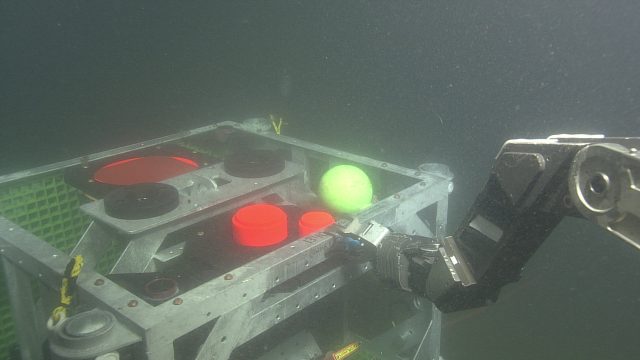
The Bio-acoustic Sonar measures acoustic signals of plankton and zooplankton on coastal arrays. The sonar emits sound waves into the water column which bounce off organisms back towards the sensor in a phenomenon known as “backscatter.” The more organisms, the higher the backscatter. Some Bio-acoustic Sonars are situated in the coastal environment (ZPLSC), while others are at the open-ocean global arrays (ZPLSG). There are cabled instruments that stream data back to shore in near real-time, and others that are uncabled and send decimated data back via telemetry; the full dataset is downloaded and made available following recovery.
Read More
CTD
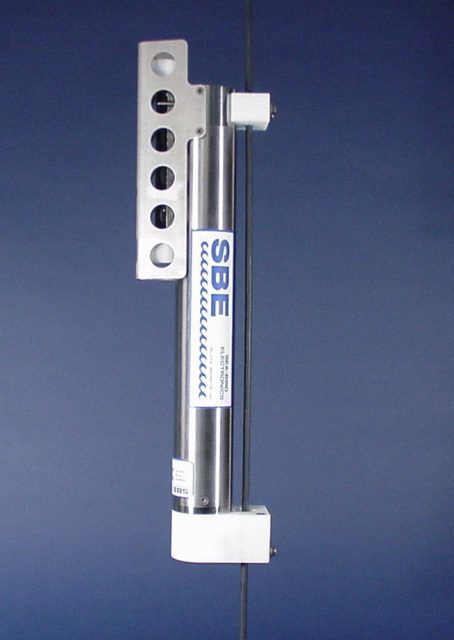
A CTD is so named as it measures Conductivity, Temperature and Depth. These parameters can then be used to calculate salinity and density. There are a variety of CTDs within the OOI program with unique capabilities. Some CTDs are configured with inductive communication (CTDMO), a pump to control flow through the instrument (CTDBP), or the ability to be mounted to a shallow water mooring (CTDMOS), profiler (CTDPF), glider (CTDGV), or AUV (CTDAV).
Read MoreFLUOR
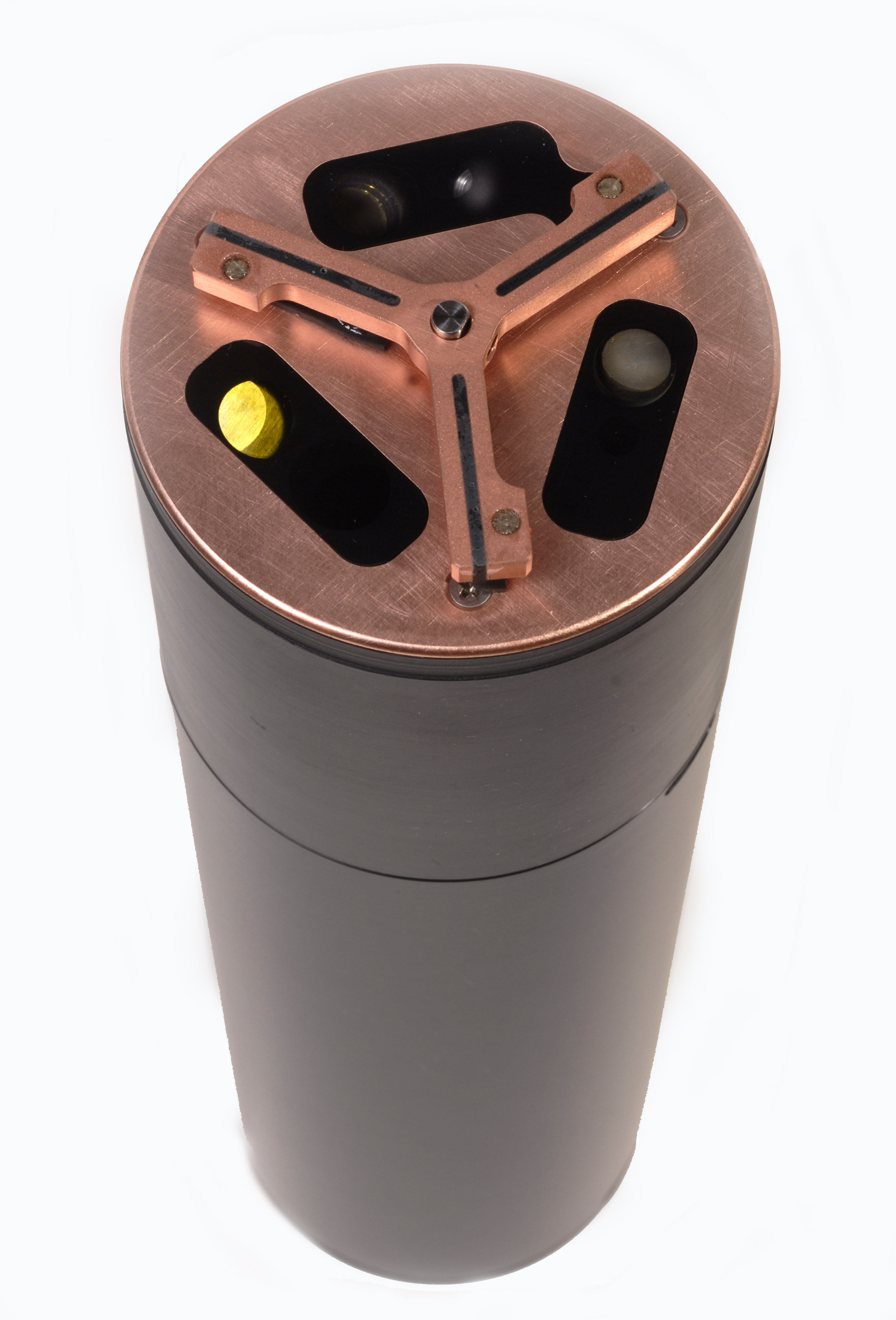
A Fluorometer is a device used to measure patterns of fluorescence. The 2-Wavelength Fluorometer (FLORD & FLNTU) specifically examines chlorophyll-a fluorescence and optical backscatter (red wavelengths). The 3-Wavelength Fluorometer (FLORT) specifically examines chlorophyll-a fluorescence, optical backscatter (red wavelengths), and colored dissolved organic matter (CDOM). The CDOM Fluorometer (FLCDR) specifically measures CDOM in the seawater.
Read MoreENG
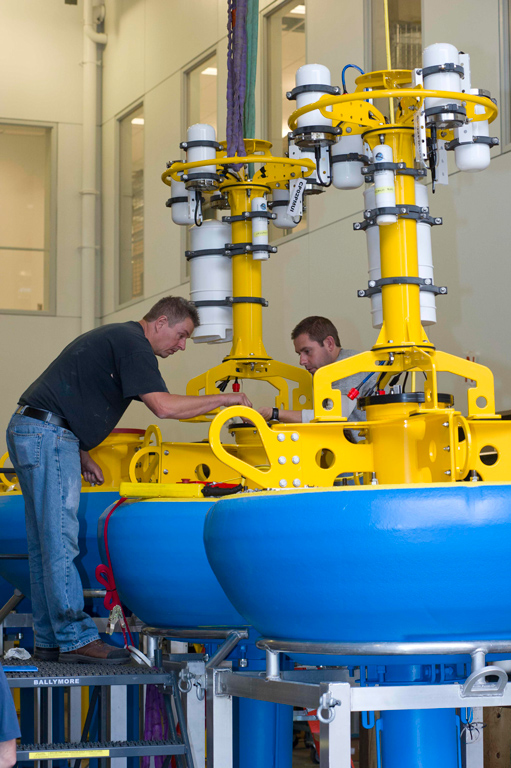
Engineering instruments provide additional measurements about the ocean environment, or the functioning of individual infrastructure components (like internal housing temperature and humidity, or ground fault detectors). These measurements are key for calibration and computation of data products from OOI science sensors.
Read MoreDO2
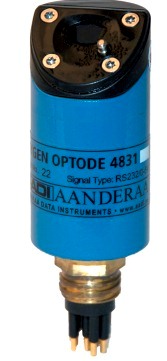
A Dissolved Oxygen sensor measures the concentration of oxygen molecules that have been dissolved, or mixed, into seawater (Dissolved Oxygen Concentration).
There are a variety of Dissolved Oxygen sensors within the OOI program with unique capabilities. Some Dissolved Oxygen sensors are configured to measure dissolved oxygen concentrations on shallow coastal profilers through rapid oxygen gradients (DOFST, the Sea-Bird SBE 43 and 43F), while others are configured for use on mobile assets, deep profilers, and moorings (DOSTA, the Aanderaa optode).
ADCP
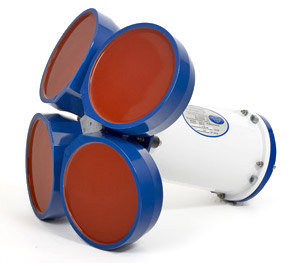
ADCPs are velocity profilers that use acoustics to measure 3D water-current velocity for a small volume of the water column above or below the sensor. High frequency sound waves (75- to 1-MHz) emitted by the profiler scatter off suspended particles and back to the sensor. The sensor calculates velocity by measuring changes in these sound waves (i.e., Doppler shifts).
Read MoreMASSP
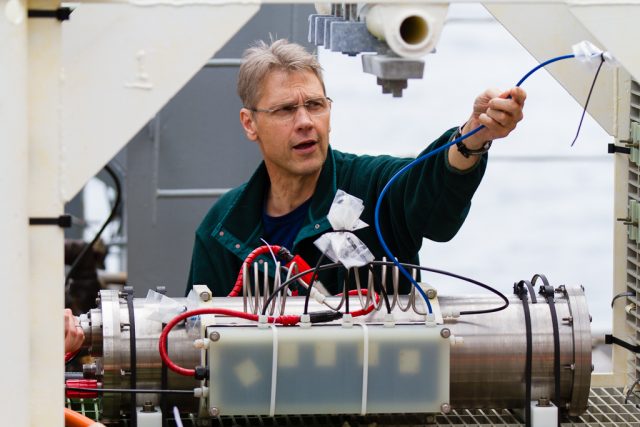
The Mass Spectrometer measures concentrations of dissolved gases such as carbon dioxide, methane, and hydrogen sulfide that are critical to understanding volcanic, chemical, and biological processes in submarine environments. Carbon dioxide in magma chambers helps drive seafloor eruptions, and, along with methane and hydrogen sulfide, is key to supporting the sub-seafloor biosphere. Until recently, it has been impossible for scientists to measure these gases in situ for long-periods of time. Scientists depended on taking individual samples from vents and seeps, and then analyzing them back in land-based laboratories.
The novel OOI mass spectrometer, developed by Peter Girguis at Harvard University, was installed at a diffuse vent site (MJ03C) on Axial Seamount and at the summit of Southern Hydrate Ridge (MJ01B). In concert, these instruments are providing real-time long-term measurements of gases in both vent and seep environments, providing critical new information about gas evolution in these dynamic systems.
The MASSP instrument class produces two core data products: Level 1 Dissolved Gas Concentrations (DISSGAS) and Level 2 Total Gas Concentration (TOTLGAS). The data for the computation of the L1 core data product are derived from the Residual Gas Analyzer (RGA) integrated in the MASSP instrument. The resulting L1 DISSGAS core data product is calculated from the L0 Mass Spectral Intensities and the sample temperature, also measured by the MASSP instrument, and is composed of the dissolved concentrations (uM) of the individual gases: methane, ethane, hydrogen, argon, hydrogen sulfide, oxygen and carbon dioxide. The L2 TOTLGAS core data product is calculated from the individual dissolved gas concentrations, the inlet fluid temperature, and the pH of the fluid also measured by the MASSP instrument, and is composed of the total concentrations (uM) of the individual gases: hydrogen sulfide and carbon dioxide.
(text and images courtesy of Interactive Oceans)
Read More