Wave Energy Converter Project Moves Toward At-Sea Testing
OOI, in partnership with the U.S. Department of Energy’s (DOE’s) Water Power Technologies Office (WPTO) is preparing to deploy a wave energy converter (WEC) device on the Pioneer MAB central surface mooring. The project aims to demonstrate how wave energy can provide reliable, renewable power for sustained ocean observation.
A recent visit brought together the team, which is comprised of experts from OOI, WPTO, Sandia National Laboratories, the National Renewable Energy Laboratory (NREL), Evergreen Innovations, Johns Hopkins University, East Carolina University, and Woods Hole Oceanographic Institution (WHOI) to focus on engineering validation for the Pioneer WEC, a critical step before at-sea testing later in the fall.
During the visit, the team carried out subsystem testing, integrated the WEC with the buoy, assembled the full system, and tested it under varied scenarios. This rigorous preparation is crucial for de-risking the upcoming deployment.
This project represents an important step toward persistent ocean observing systems. By reducing reliance on ship-based servicing and enabling longer-term autonomous operation, wave energy has the potential to transform how sustained ocean science is conducted.
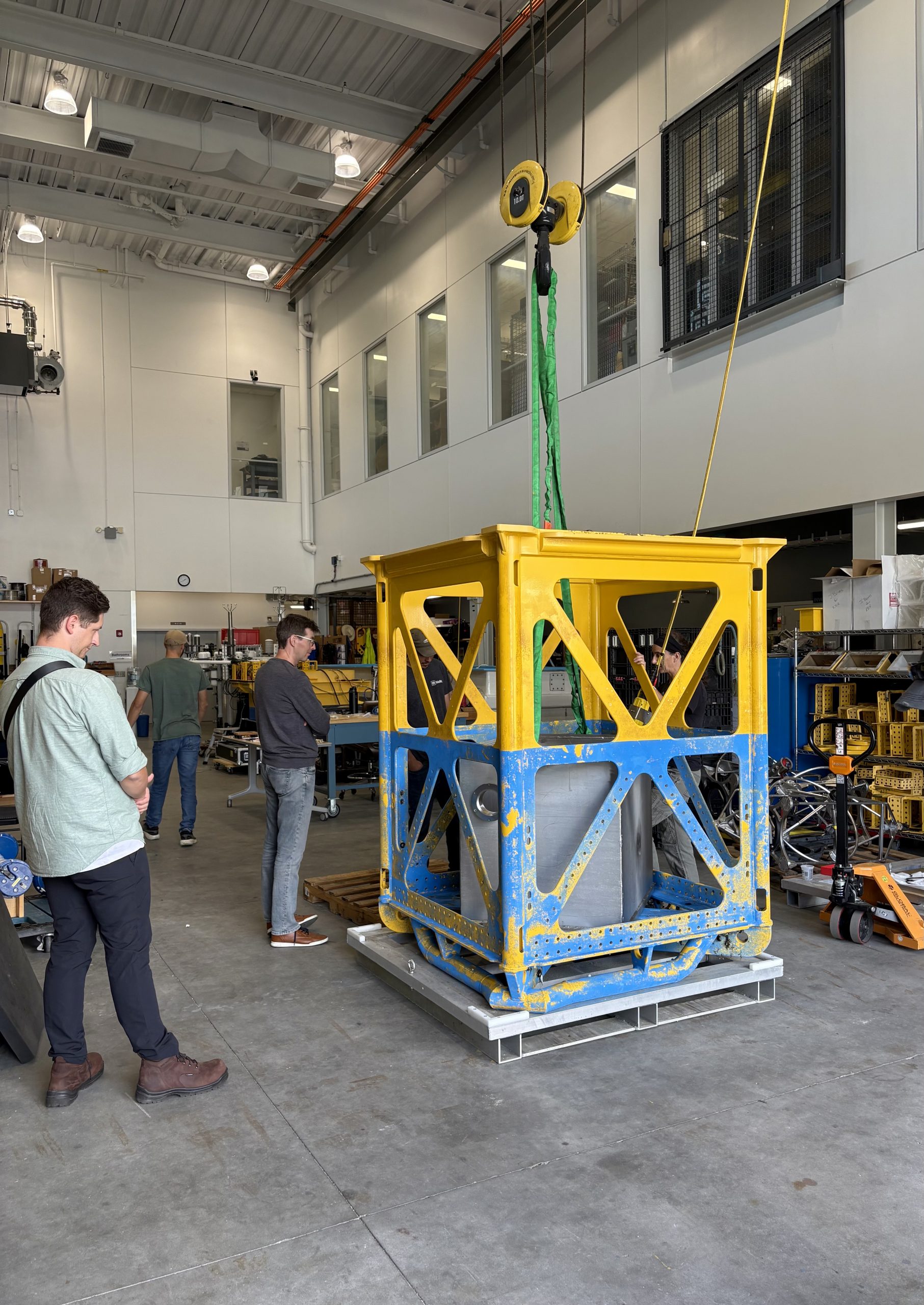
Taylor Mankle, NREL, and Johannes Spinneken, Evergreen Innovations, inspect the WEC housing installed in the buoy base. © Amber Coogan, WHOI
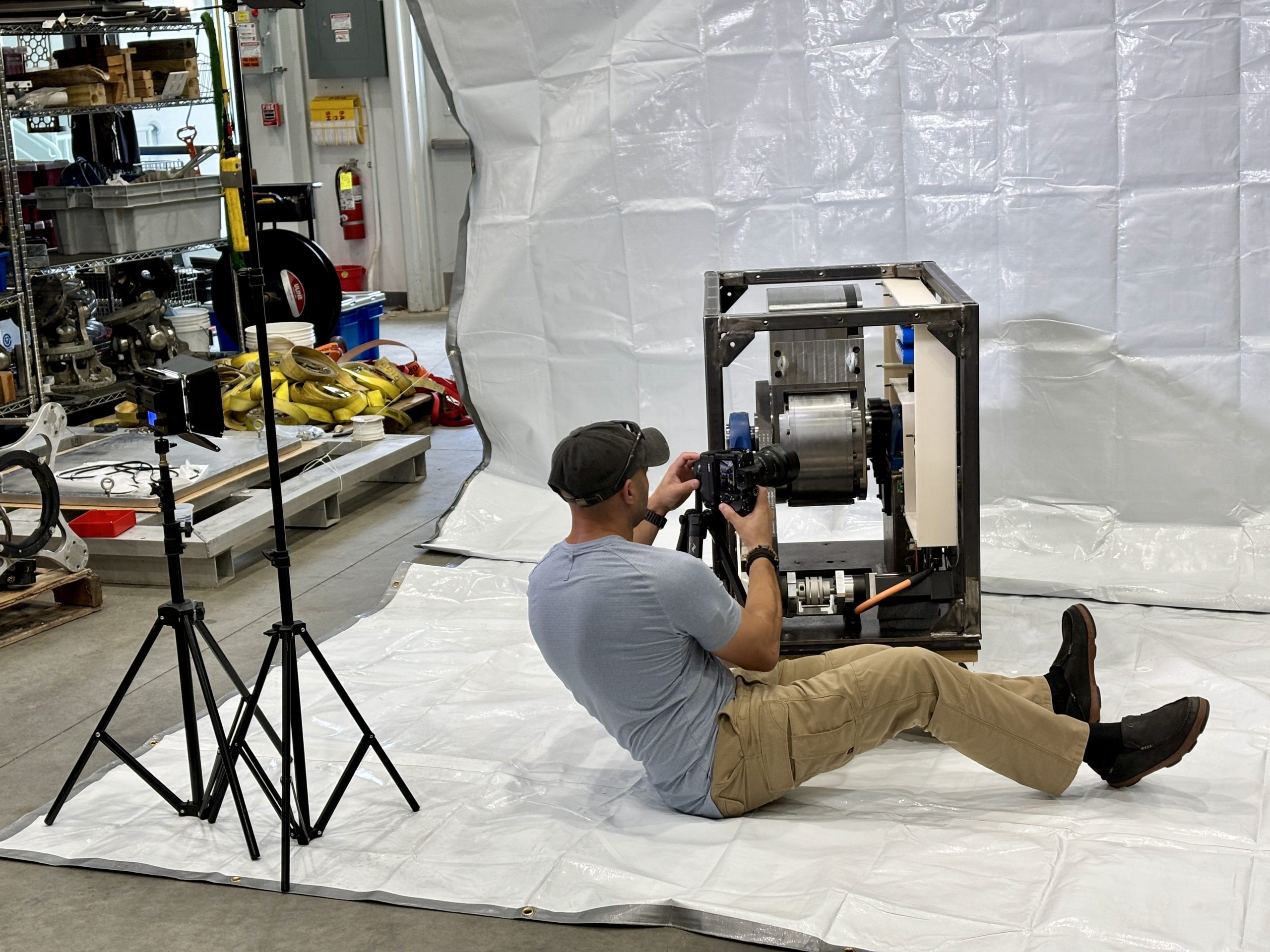
Joshua Bauer, NREL, captures still images for a 360° photographic reconstruction of WEC. © Ken Kostel, WHOI
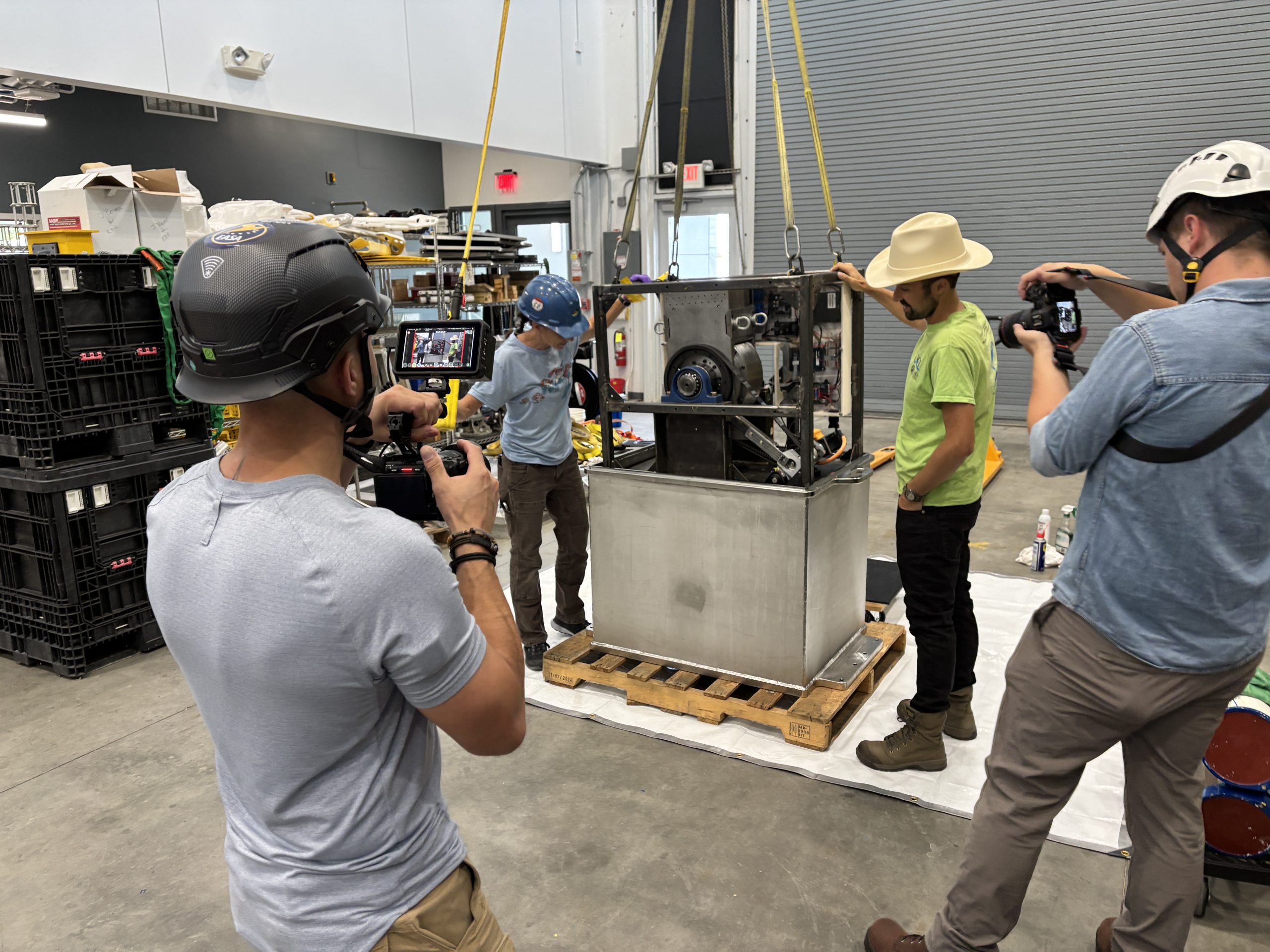
Joshua Bauer, NREL; Taylor Mankle, NREL; Meghan Donohue, WHOI; and Alex Franks, WHOI, install the WEC system into its watertight housing. © Ken Kostel, WHOI