
Wave Power and UV Beams: OOI and 3newable Advance Wave-Powered Ocean Observing
Ocean technology is evolving rapidly, and wave energy is emerging as another promising pathway toward resilient, low-maintenance ocean observing systems. As part of that shift, 3newable LLC CEO Julie Fouquet and her team have been developing an innovative Wave Energy Converter (WEC) designed to provide reliable, small-scale power for ocean observing platforms. In parallel, they have created an ultraviolet (UV) illuminator designed to reduce biofouling on sensitive instruments.
Following a recent deployment at OOI’s Coastal Endurance Array, Fouquet sat down with us to discuss the evolution of the project, lessons learned from at-sea testing, and her vision for renewable ocean power in the years ahead.
From Concept to Ocean Deployment
The WEC project has gone through several iterations, including an early effort to test at OOI’s Pioneer New England Shelf Array. But logistical hurdles, funding constraints, and the eventual relocation of the Pioneer array prompted a pivot toward OOI’s Endurance Array, where Jonathan Fram, co-PI and Project Manager for the Endurance Array, was eager to support the UV-illumination component of the work.
That transition, initiated in 2022, set the stage for 3newable’s first field deployment in fall 2023, followed by a second deployment in spring 2025. The Endurance Array offered a flexible testbed and an engaged team ready to collaborate on mechanical integration, biofouling mitigation, and performance monitoring.
The WEC isn’t trying to compete with large-scale offshore energy systems. Instead, it’s purpose-built to deliver steady, modest power for sensors and low-draw electronics on buoys. In laboratory conditions, it can produce up to 50 watts, while real-world deployments are expected to eventually yield about 7 to 8 watts per WEC time-averaged over a year. Its fully sealed mechanical design prevents saltwater ingress, and its direct-drive electromagnetic engine allows it to operate with notably higher efficiency than many conventional designs.
Fouquet explained that the WEC uses a rack and pinion mechanism to convert buoy tilting motion into rotational power. While straightforward in concept, optimizing this system in real wave conditions demands careful tuning and specialized control algorithms. Wave-energy technologies vary widely, from large flaps and heaving-buoy systems to fully self-powered platforms, and with so many disparate approaches, nothing close to a “standard” design has emerged in the field. Given the wide range of wave-energy converter designs in the field, real-world deployments at the Endurance Array have been especially valuable in showing how the WEC’s sealed, compact approach behaves in operational conditions and where further refinements can enhance its performance.
Solving a Costly Challenge: Biofouling
One of OOI’s ongoing challenges is biofouling, which can shorten sensor deployments, degrade data quality, and drive-up servicing costs. Wide-angle emitters in the UV have been used to inhibit biofouling growth on some instruments, but they are not well-suited to the long, narrow geometries of the precision conductivity sensors used to measure salinity. Fouquet’s team developed a UV beam illuminator that can be powered either directly from the WEC or from a battery to keep the interior of a conductivity sensor clean.
During recent testing on buoy CE04, the UV system slightly outperformed tributyltin inserts that have traditionally been used to suppress microbial growth, while also offering a non-toxic alternative that avoids the environmental concerns associated with those legacy chemicals. Feedback from OOI engineers played a direct role in refining both the design and the deployment strategy, helping shape the system into a more effective tool for biofouling control.
The UV illuminator has become one of the project’s most promising offshoots, with potential to reduce maintenance cycle frequencies across a range of ocean observing platforms.
Testing the WEC at Sea: Early Data and Next Steps
In addition to working with OOI staff, 3newable also brought on recent OSU graduate Cedric LaPeyre, who had participated in the university’s Marine Energy Collegiate Competition (MECC) team. For the past four years, Endurance Array staff have collaborated with OSU’s MECC teams, each of which has designed a WEC concept around an OOI surface mooring for the Department of Energy competition. Through those connections, OOI was able to link Julie with students whose experience and skill sets aligned well with 3newable’s needs. La Peyre worked on the WEC at 3newable and on preparing the WEC for deployment at OOI-OSU.
During the recent deployment, the WEC achieved a net average power generation of 0.91 watts over 1 1/2 weeks, even in relatively low-energy conditions. Peak net average power generation during a five-minute interval was 2.4 W. For this demonstration, a commercial controller that consumes approximately 3 W was used in the control circuit, so the generated power was close to 4 W and the peak was over 5 W. The team also identified several engineering priorities, including better lubrication, wave-specific tuning, and control system modifications to maximize output in variable seas.
Fouquet emphasized that continued sea trials are essential: “We challenge our equipment in the lab, but the ocean is the ultimate test environment. Every deployment teaches us something new about the design, about the conditions, and about how to make our equipment truly practical.”
Funding Realities and Looking Forward
3newable deeply appreciates past support from the U.S. Department of Energy’s Water Power Technologies Office. However, changes to federal funding priorities have created major delays and uncertainties. Fouquet expressed concern that many renewable-energy innovators face similar hurdles, particularly smaller companies working on niche but important technologies.
Still, the long-term vision remains clear: “Expand the role of renewables within ocean observations and reduce the frequency of service voyages so that observing systems can sustain themselves with minimal intervention,” said Fouquet.
3newable would like to continue refining both the WEC and the UV illuminator, exploring new deployment opportunities, and working with OOI to strengthen ocean observing infrastructure through clean, efficient power.
As testing continues, the WEC project showcases the power of collaboration between engineers, researchers, and observing programs. Fouquet’s willingness to iterate quickly, integrate feedback, and share results openly reflects the spirit of innovation OOI strives to foster.
We look forward to sharing future updates as the project advances and as renewable ocean power becomes an increasingly central part of the global ocean observing landscape.
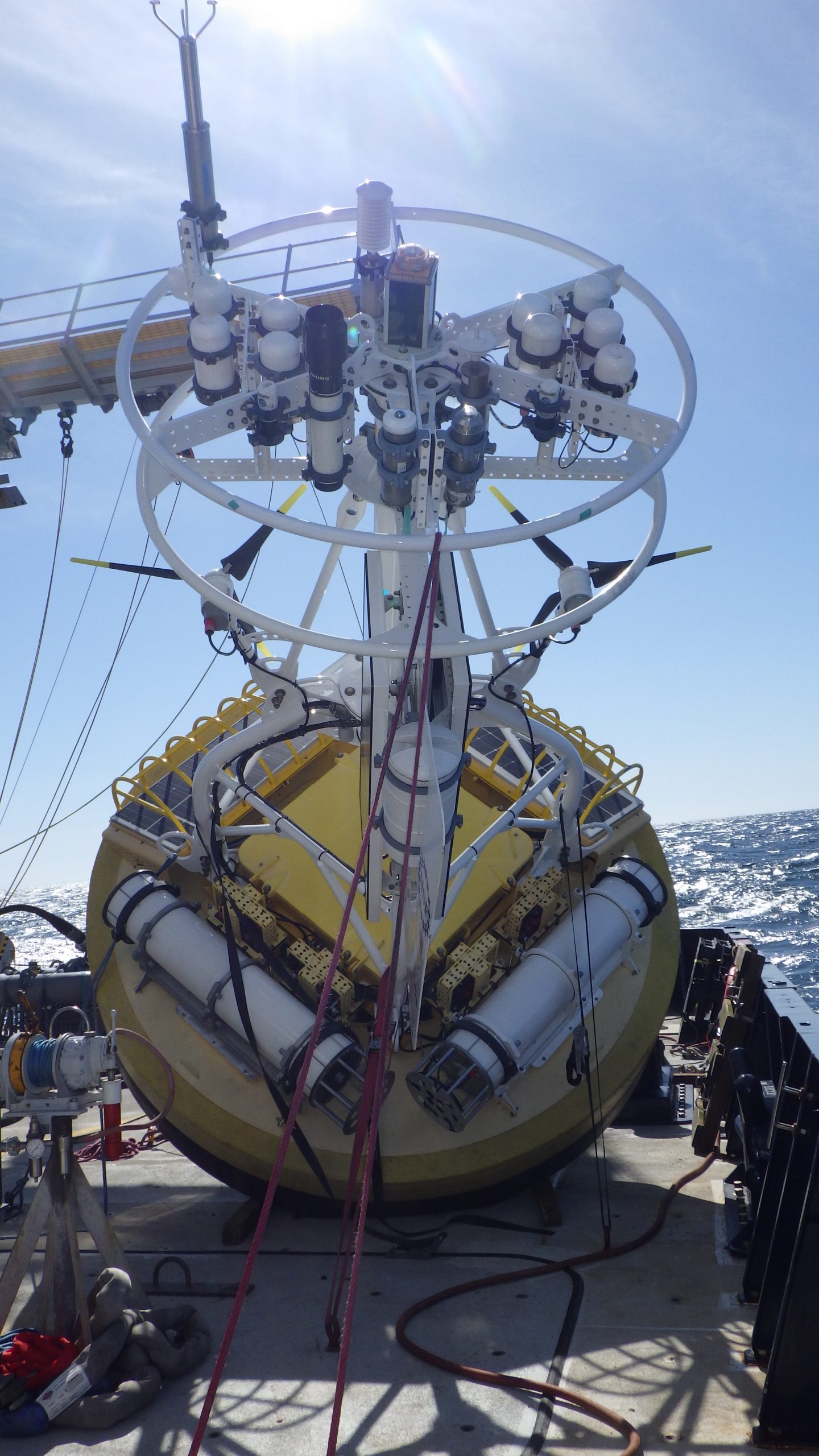
WEC UV Summer 2025 Deployment. (c): Endurance Array, OSU
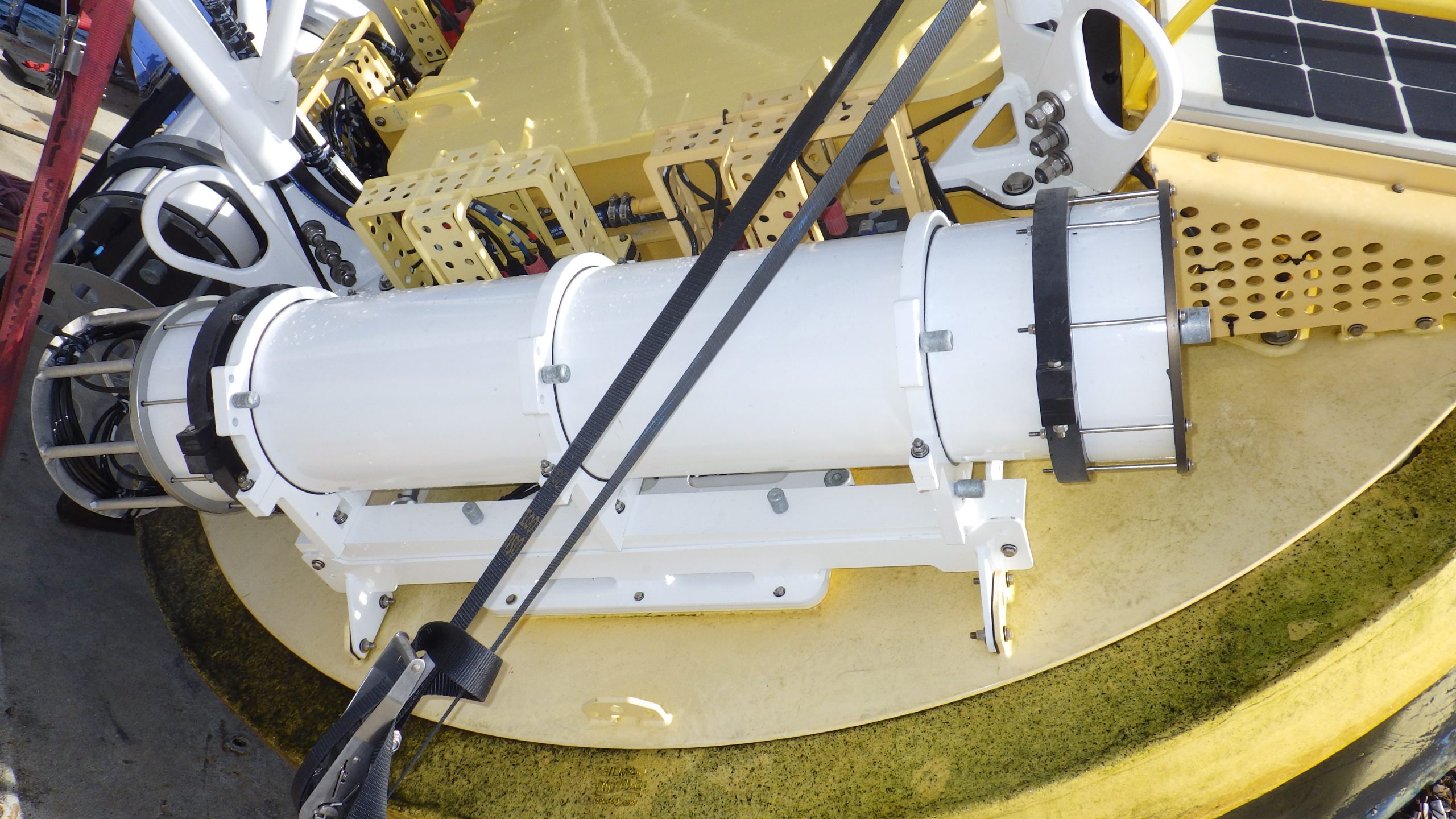
WEC Upon Recovery. (c): Endurance Array, OSU
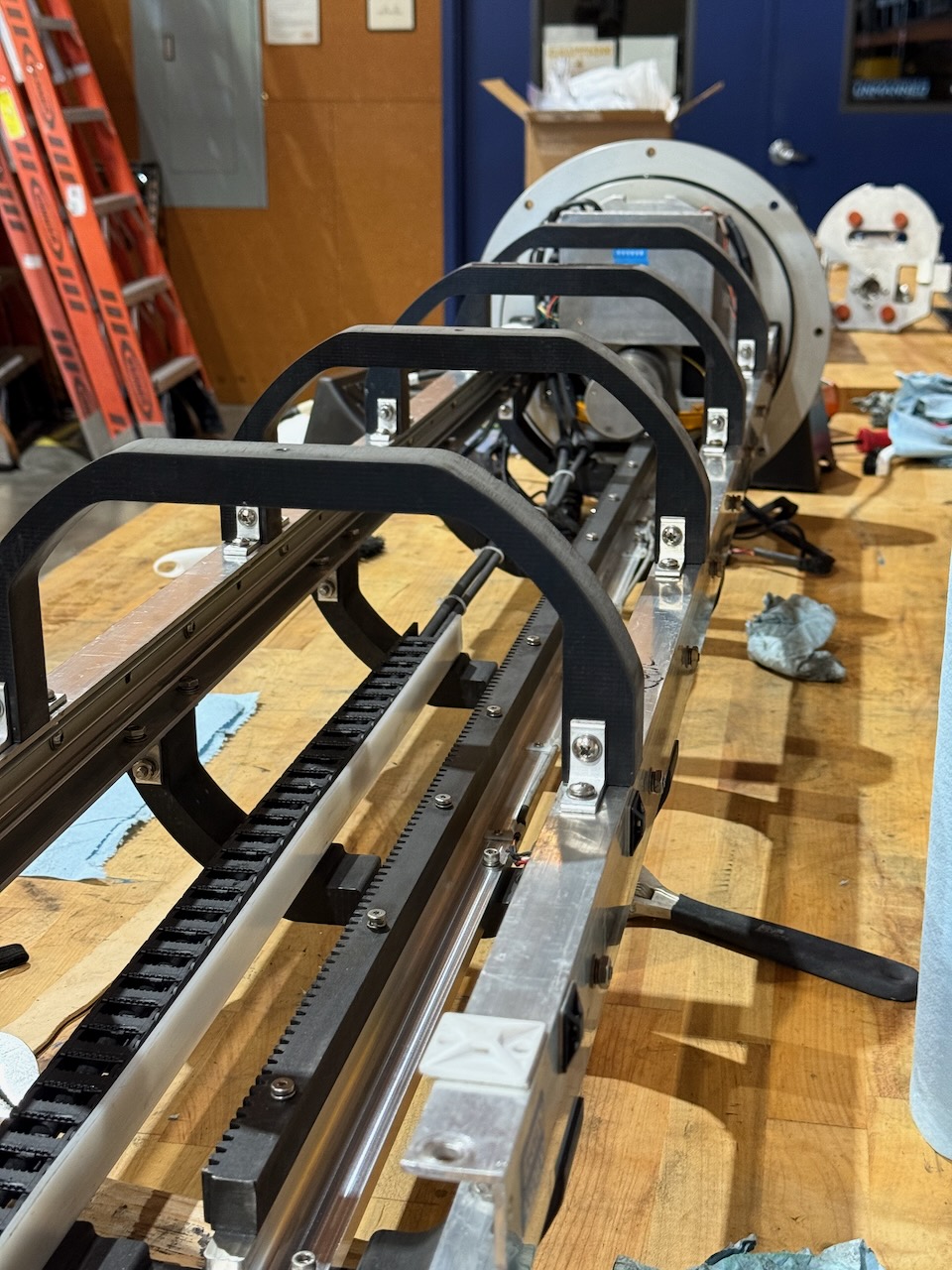
WEC chassis after recovery at OOI-OSU. (c): Julie Fouquet, 3newable LLC
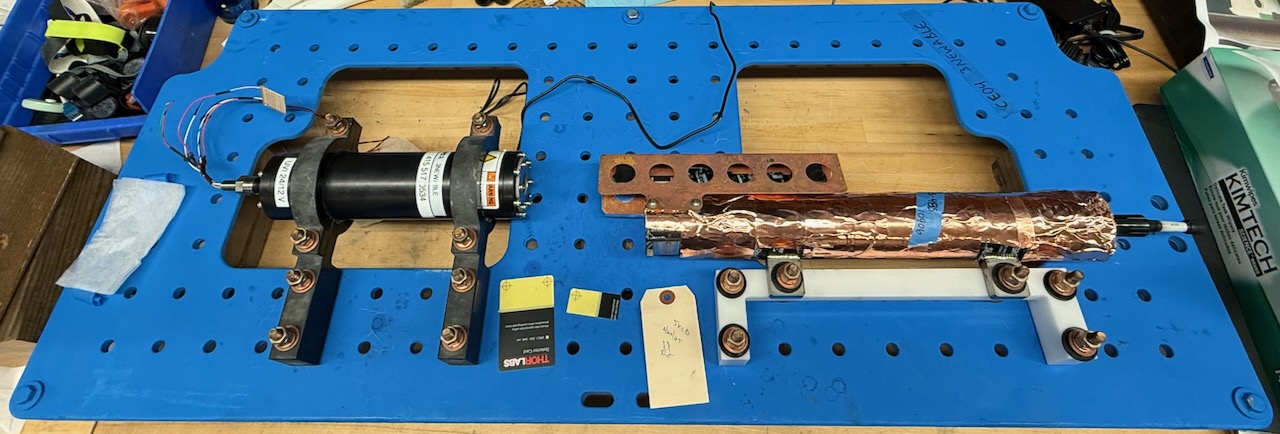
3newable’s UV illuminator (at left) sends a beam down the interior of the conductivity cell of a salinity sensor (at right) to prevent biofouling. (c): Julie Fouquet, 3newable LLC
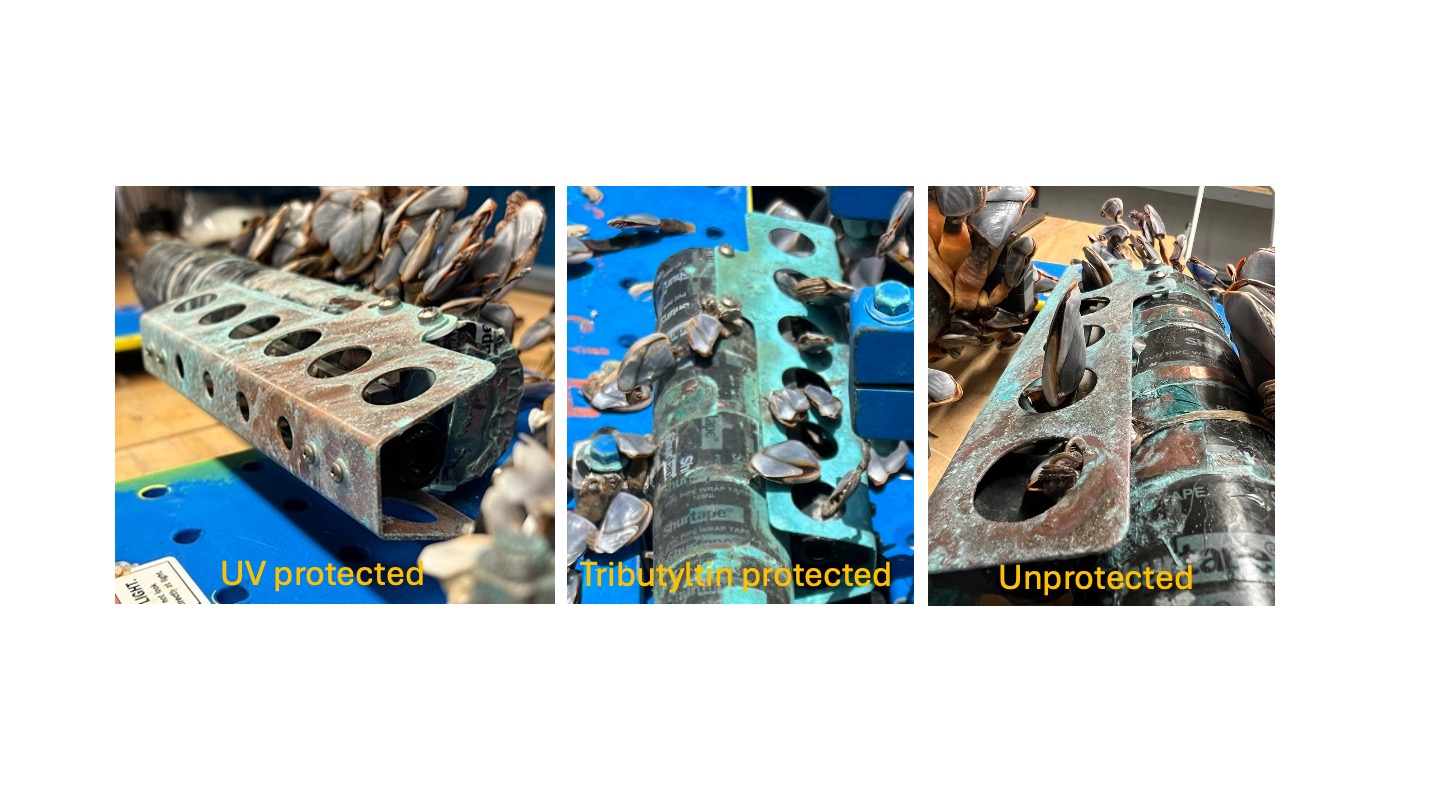
Gooseneck barnacle growth varied by treatment: healthy on the unprotected CT, weakened near the tributyltin-protected CT, and nearly absent beside the UV-protected CT. (c): Julie Fouquet, 3newable LLC