Empowering Ocean Research: The Evolution of the OOI Data Center at Oregon State University
Written by Craig Risien, OOI Data Center Program Manager, and reviewed by Jack Barth, DC Principal Investigator
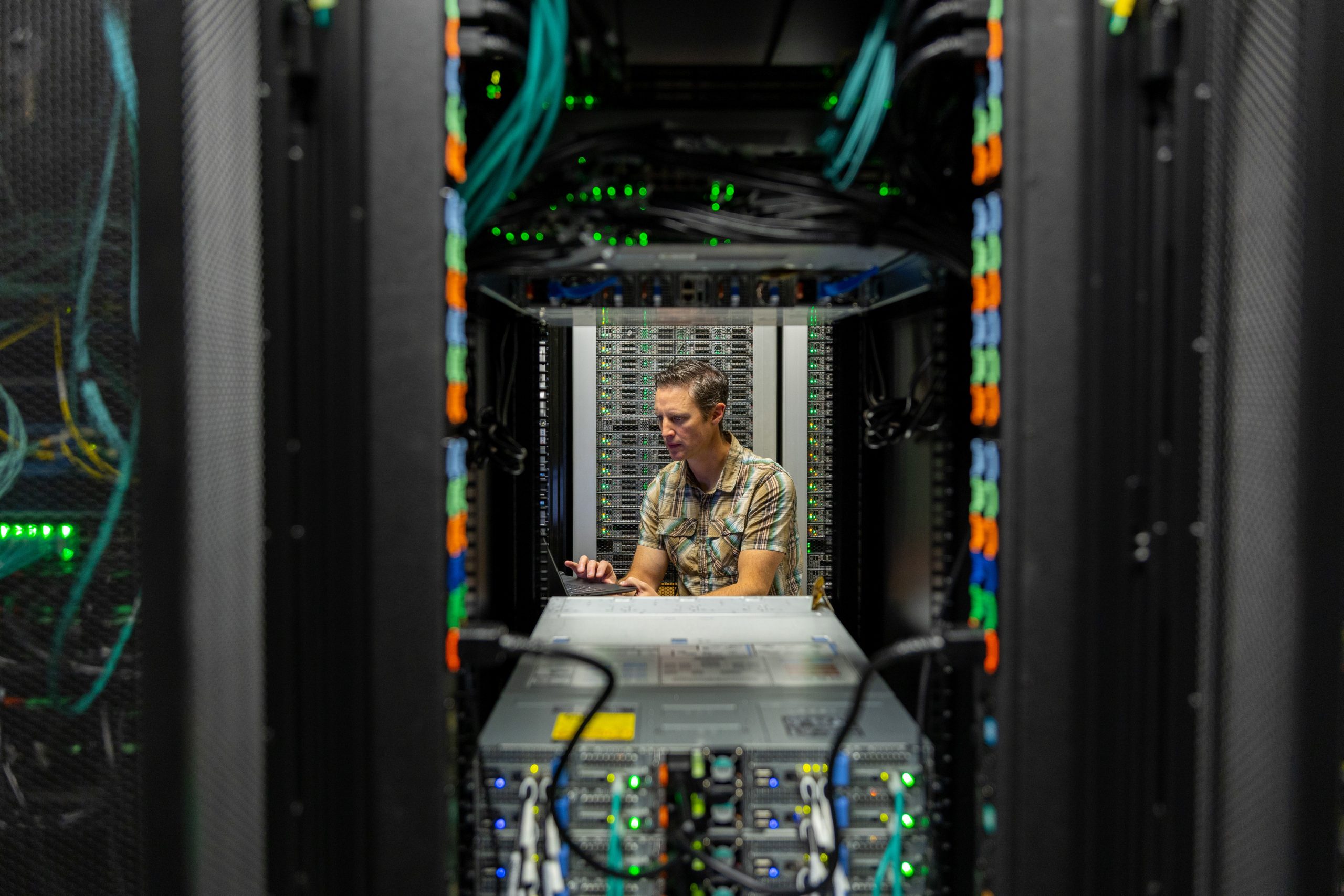
Oregon State University (OSU) in collaboration with Dell Technologies, has led the development and operation of the Ocean Observatories Initiative (OOI) Data Center since 2021. This facility serves as the backbone of OOI, supporting the collection, management and distribution of scientific data from across the OOI network.
Working closely with Dell Technologies, OSU built and configured the OOI 2.0 Data Center – a secure, scalable, and modern computing environment that become the official system of record on July 30, 2021. The transition from Rutgers University was completed without any downtime or disruption to services. Since then, the OSU team has maintained continuous operations with zero unplanned outages.
In 2025, OSU and Dell Technologies completed a major upgrade, launching the OOI 2.5 Data Center. This refresh doubled the data storage capacity, increased the network speeds by a factor of four, and greatly expanded the compute capacity, ensuring that OOI can continue to meet the growing demands of ocean data processing and delivery. The upgrade also significantly enhanced OOI’s cybersecurity by partnering with the National Science Foundation (NSF) funded Texas Advanced Computing Center (TACC), which provides a geographically remote, immutable backup of all OOI scientific data. The transition from OOI 2.0 to 2.5 was completely in Spring 2024.
Today, the OOI Data Center manages approximately 3.3 petabytes (PB) of data and distributes over 200 terabytes (TB) of data each year in response to more than 50 million data requests.
To simplify user access, the Data Center adopted CILogon, an NSF and Department of Energy (DOE) supported identity management system. This allows users to securely log in with credentials from their home institutions or identity providers such as ORCID, removing the need for multiple accounts.
OOI’s cybersecurity program continues to grow under the guidance of Trusted CI, the NSF Cybersecurity Center of Excellence. In 2022, the Data Center joined the first Trusted CI framework assessment cohort. In 2023, it became a member of the Trusted CI Research Infrastructure Security Community (RISC). In 2024, the team completed a framework reassessment alongside three other NSF Major Facilities, reaffirming its leadership position in cybersecurity.
The Data Center also offers a JupyterHub environment that givers researchers and students direct access to OOI data with no downloads required. This free resource supports Python, R, and MATLAB and includes NVIDIA GPUs for AI and machine learning work. JupyterHub has supported multiple community activities, including the 2023 Bio-optics Sensors and 2025 Acoustics OOIFB Summer Schools, the 2025 Imaging FlowCytobot (IFCB) Workshop, and numerous undergraduate courses, helping researchers and educators explore OOI data more efficiently.
Credit: Oregon State University (OSU)