
Endurance Array Update: Maintaining Critical Observations off Oregon
The U.S. National Science Foundation (NSF) Ocean Observatories Initiative Endurance Array (EA) continues to adapt to evolving funding conditions while maintaining key ocean observations along the Oregon coast.
In September 2025, NSF allowed the Oregon Shelf mooring to remain in the water through spring 2026, even as most other moorings in the array were paused. Since then, the absence of other moorings has been noticed – local fishermen have reached out with concerns, highlighting how widely these data are used beyond solely the research community.
“We heard directly from fishermen when the data stream went offline,” said Ed Dever, Principal Investigator of the Endurance Array. “That really shows how important these observations are – not just for research, but for real-world decision-making and safety.”
Through additional funding provided under a continuing resolution, the Endurance Array team now plans to recover and redeploy the Oregon Shelf mooring in June 2026 and again in October 2026. These efforts are intended to keep the mooring operational through at least spring 2027.
“Our focus is on continuing operations with the resources we have,” Dever said. “Even maintaining a subset of these observations is critical for the scientific community.”
The current deployment, which began in June 2025, has not been without challenges. In late January 2026, the mooring lost wind turbine charging capability, forcing the team to suspend real-time data transmission to conserve power. Despite this setback, many battery-powered instruments have continued to record data internally, which will be recovered during the upcoming June cruise.
As seasonal conditions improve, increasing solar energy has provided enough power to bring meteorological sensors back online and resume partial real-time data transmission.
In addition to the mooring, NSF has approved continued glider operations along the Newport Line. A glider currently in the water is collecting subsurface measurements, such as temperature, salinity, oxygen, and chlorophyll, and transmitting data in near real time, helping to sustain this long-standing observational record.
“The Newport Line is part of a long-standing time series that predates OOI,” Dever said. “It remains an essential component for understanding variability in the California Current system.”
Together, these efforts reflect a focused strategy: maintaining the most critical observations and preserving long-term data records, even under constrained resources.
“Long-term time series are incredibly valuable,” Dever emphasized. “Once they’re interrupted, you can’t simply recreate them – it’s a permanent loss of insight into how the ocean is changing.”
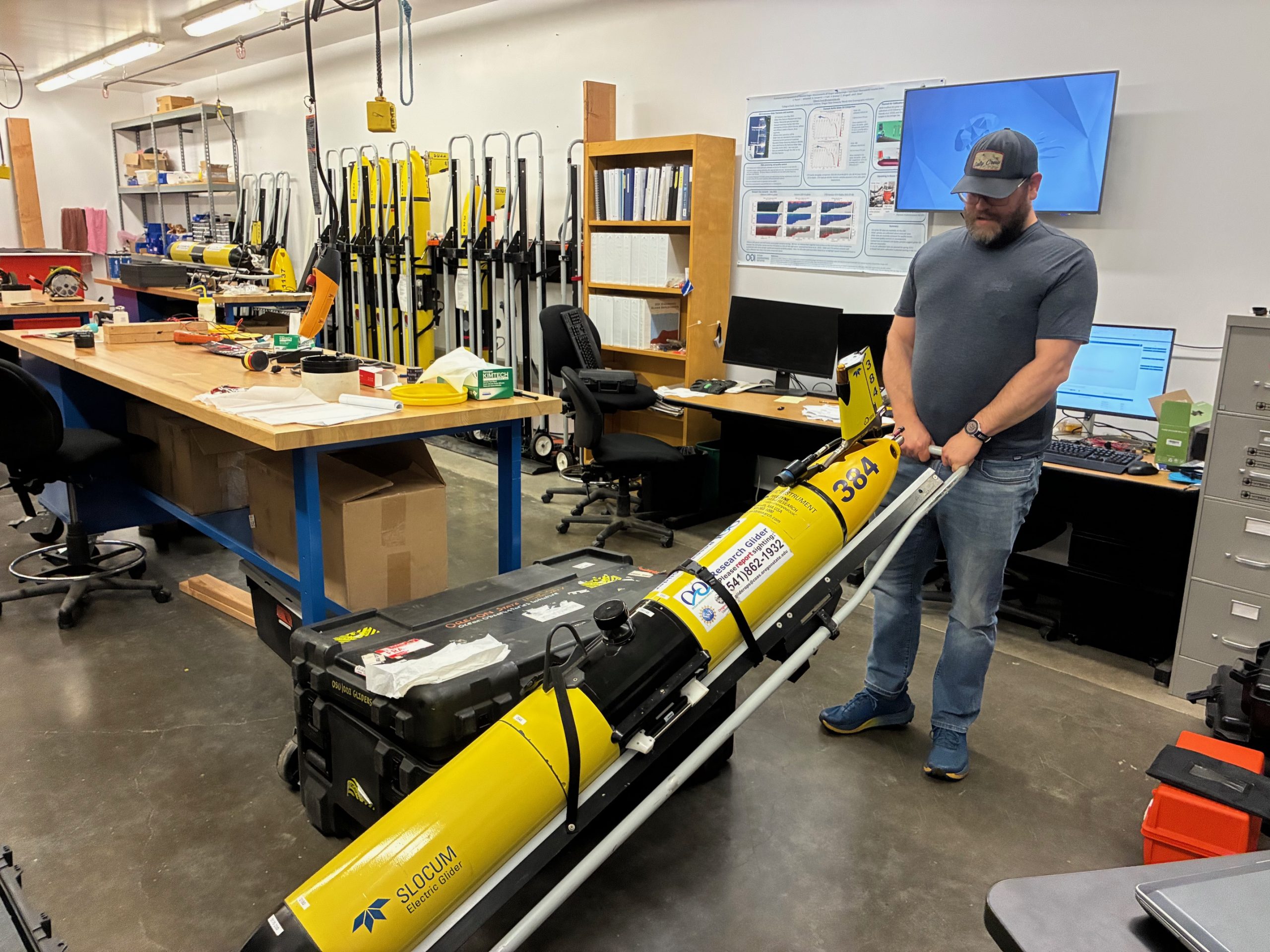
Glider technician Stuart Pearce with glider prepped for deployment on the Newport line. This glider is ready to deploy in the spring prior to the June 2026 cruise. Photo credit: Ed Dever, OSU
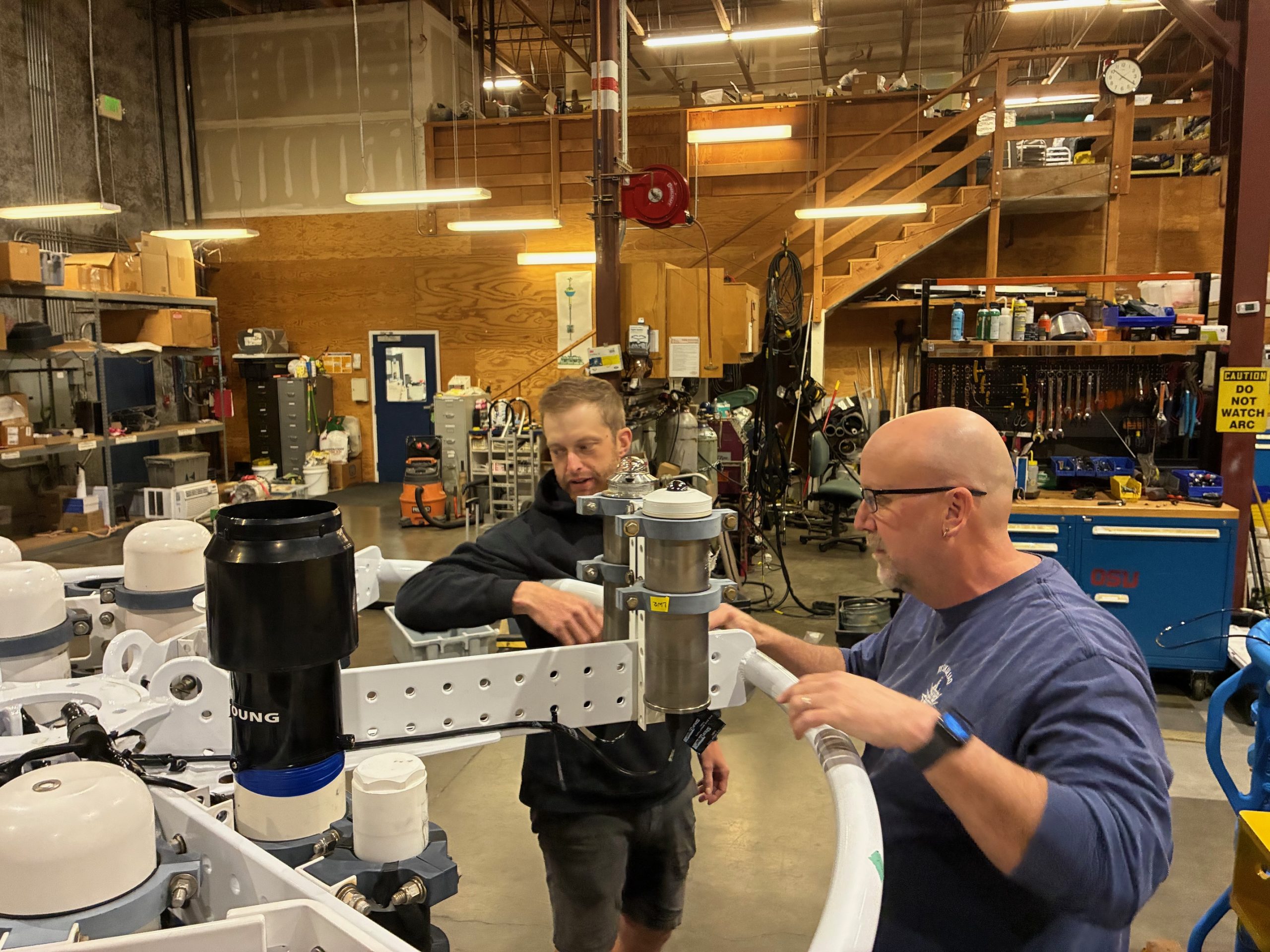
Mooring integration lead Alex Wick (left) and data lead Chris Wingard (right) examine met instruments on the Oregon Shelf buoy to be deployed in June 2026. Instruments have been programmed and are being tested in the high bay. Photo credit: Ed Dever, OSU
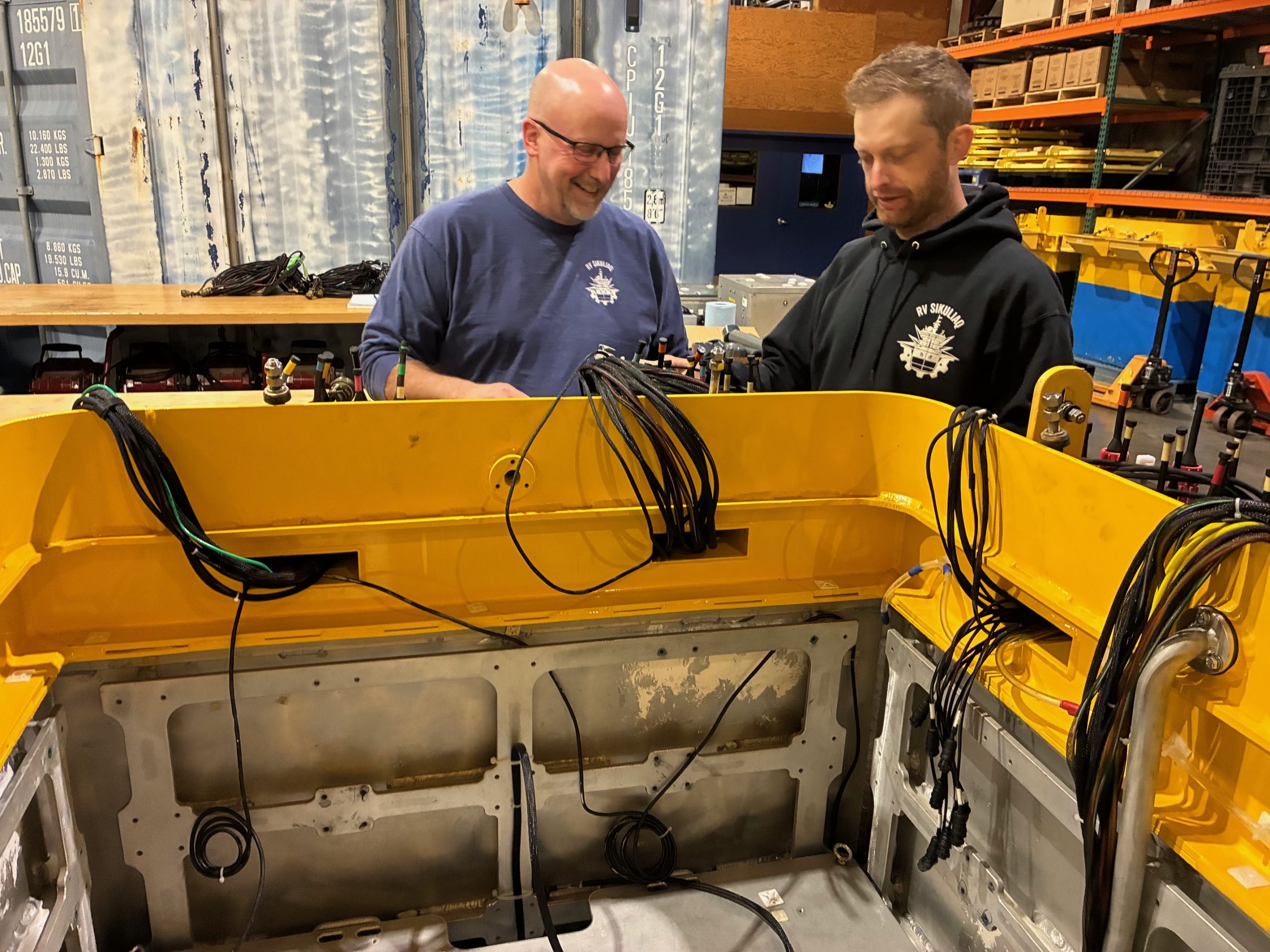
Data lead Chris Wingard (left) and mooring integration lead Alex Wick (right) examine the wiring harness on the Oregon Shelf buoy well to be deployed in October 2026. Early prep work is being done to enable this mooring to be deployed in October. Photo credit: Ed Dever, OSU