
New Research Powered by OOI Data: July 2026
Spatial Variability in Year-to-Year, Near-Bottom Hypoxia Over the United States Pacific Northwest Continental Shelf
Authors: J. A. Barth and S. W. Coleman
Each summer, strong coastal winds drive nutrient-rich deep water onto the Pacific Northwest continental shelf through a process known as coastal upwelling. While these nutrients support one of the region’s most productive marine ecosystems, the upwelled water is also naturally low in oxygen. As organic matter decomposes, oxygen levels can drop even further on the shelf, creating hypoxic conditions that can threaten marine life.
In a recent study, researchers J. A. Barth and S. W. Coleman examined the extent and variability of near-bottom hypoxia along the U.S. Pacific Northwest continental shelf from 2021 through 2024. By combining observations from multiple ocean observing platforms, including the U.S. NSF Ocean Observatories Initiative (OOI), the authors mapped seasonal, near-bottom (within 15 m of the bottom) low-oxygen conditions and investigated the environmental processes driving them.
The study found that near-bottom hypoxia affected between 28% and 52% of the continental shelf each summer, with the largest extent occurring in 2021 when upwelling-favorable winds were particularly strong. Although the severity varied from year to year, the spatial distribution of hypoxia remained remarkably consistent, highlighting the strong influence of regional oceanographic processes.
Researchers also found evidence that stronger seasonal upwelling winds contribute to more widespread hypoxia. Because climate models project increases in coastal upwelling-favorable winds , these findings suggest that low-oxygen events could become more frequent or extensive in the future.
How OOI Data Contributed
Observations from OOI’s Coastal Endurance Array and Regional Cabled Array provided continuous dissolved oxygen measurements that complemented ship-based surveys and other regional observing systems. Long-term, high-frequency observations like these allow scientists to monitor changing ocean conditions, identify emerging trends, and place individual events within a broader environmental context.
Why It Matters
Low-oxygen waters can stress or displace commercially and ecologically important marine species, affecting fisheries, ecosystems, and coastal communities. This study demonstrates how sustained observations from OOI help scientists understand the processes driving hypoxia and improve our ability to monitor and anticipate changes in coastal ocean health as the climate continues to change.
Citation
Barth, J. A., & Coleman, S. W. Spatial Variability in Year-to-Year, Near-Bottom Hypoxia Over the United States Pacific Northwest Continental Shelf.
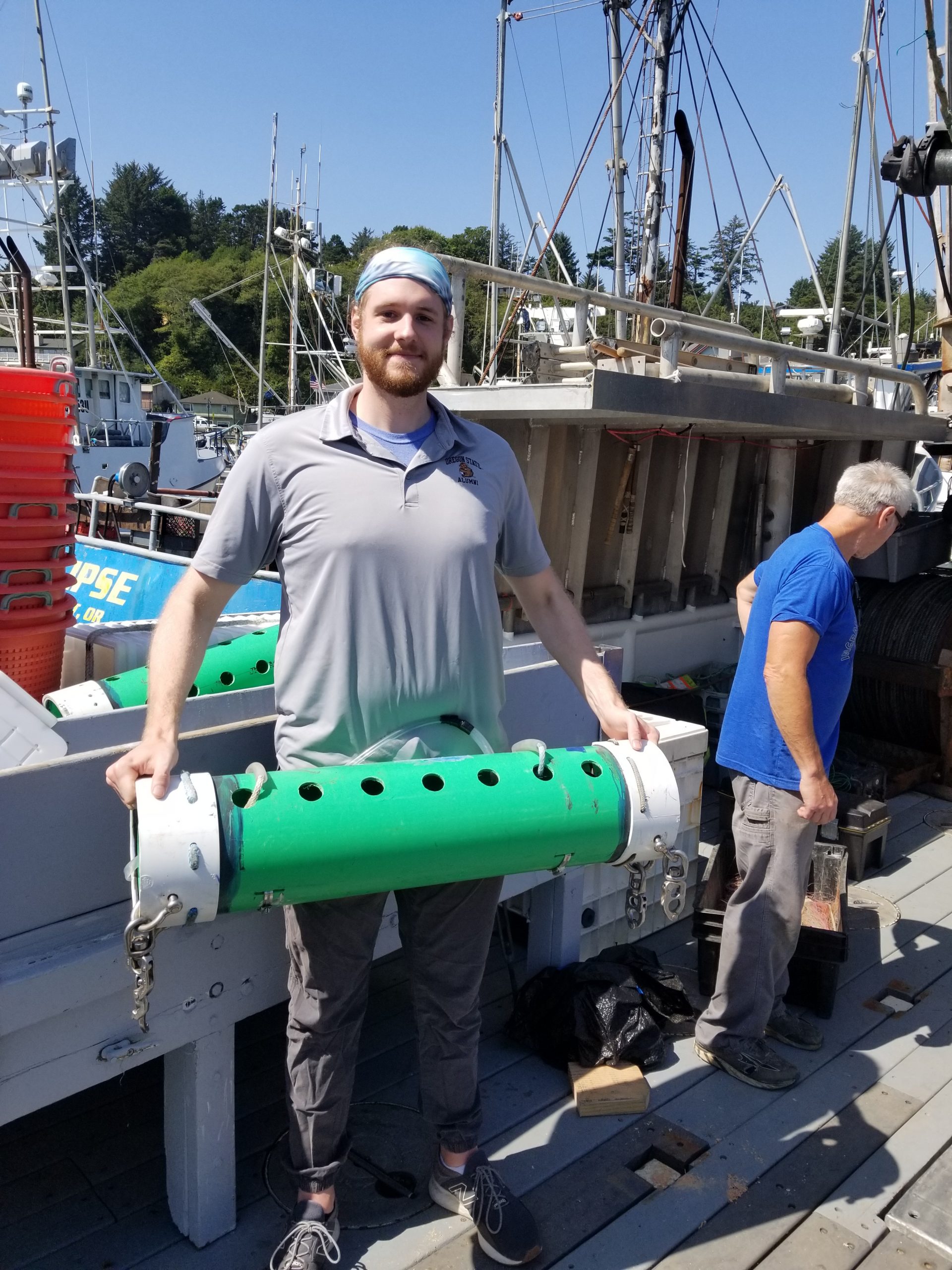
Sean Coleman holds a trawl-mounted CTD instrument used to measure dissolved oxygen during NOAA’s annual groundfish surveys. These observations were among the datasets used in the study. Photo credit: J. A. Barth.
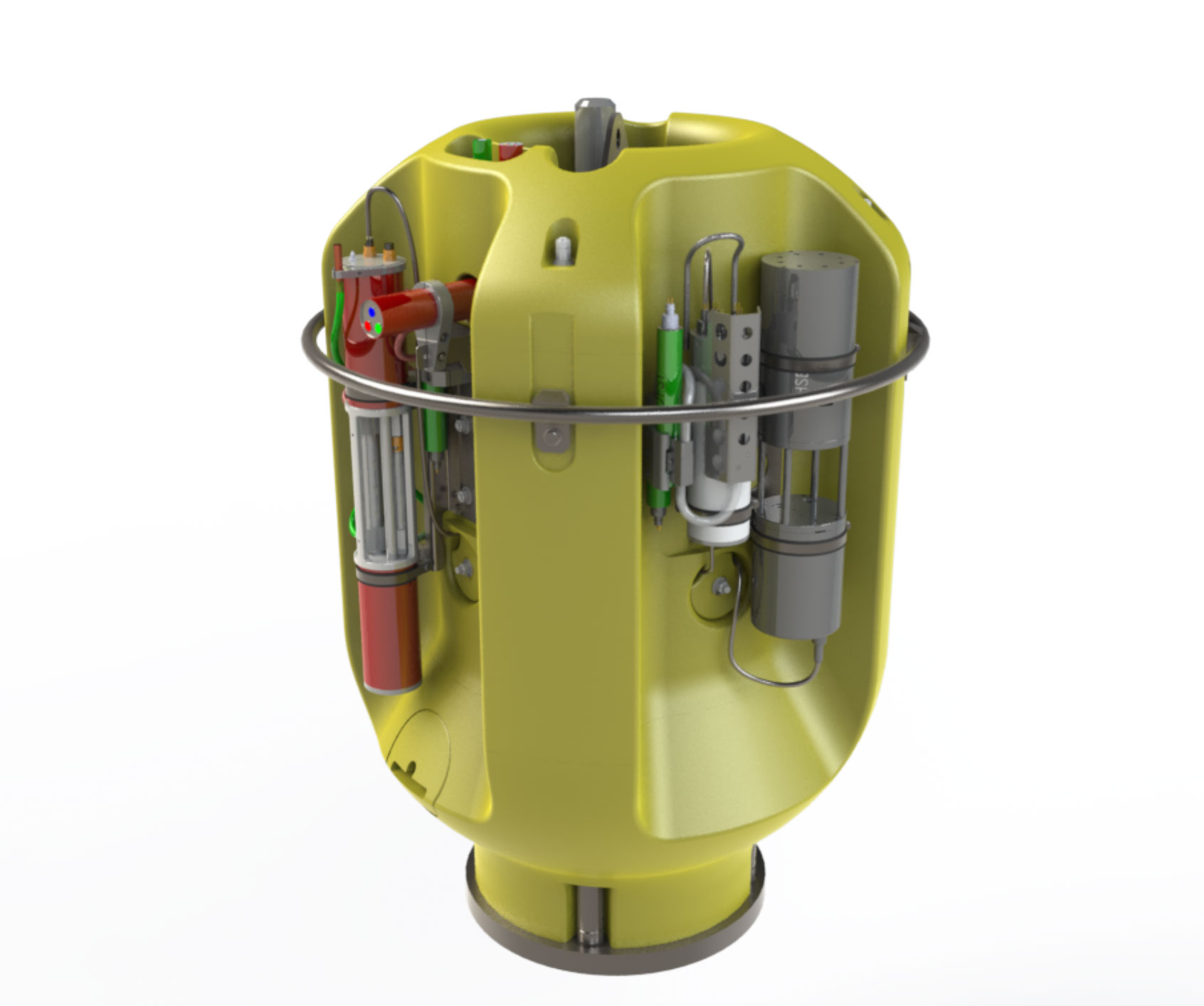
The OOI Regional Cabled Array Shallow Profiler, whose observations contributed to the findings presented in the study. Illustration: Patrick Waite, University of Washington.