
Archive for January 2022
Improving Remote System Response in Increasingly Hostile Oceans
Wind and Waves and Hydrogen, Oh My!
Improving remote system response in increasingly hostile oceans
This article is a continuation of a series about OOI Surface Moorings. In this article, OOI Integration Engineer Alexander Franks discusses the mooring software and details some of the challenges the buoy system controller code has been written to overcome.
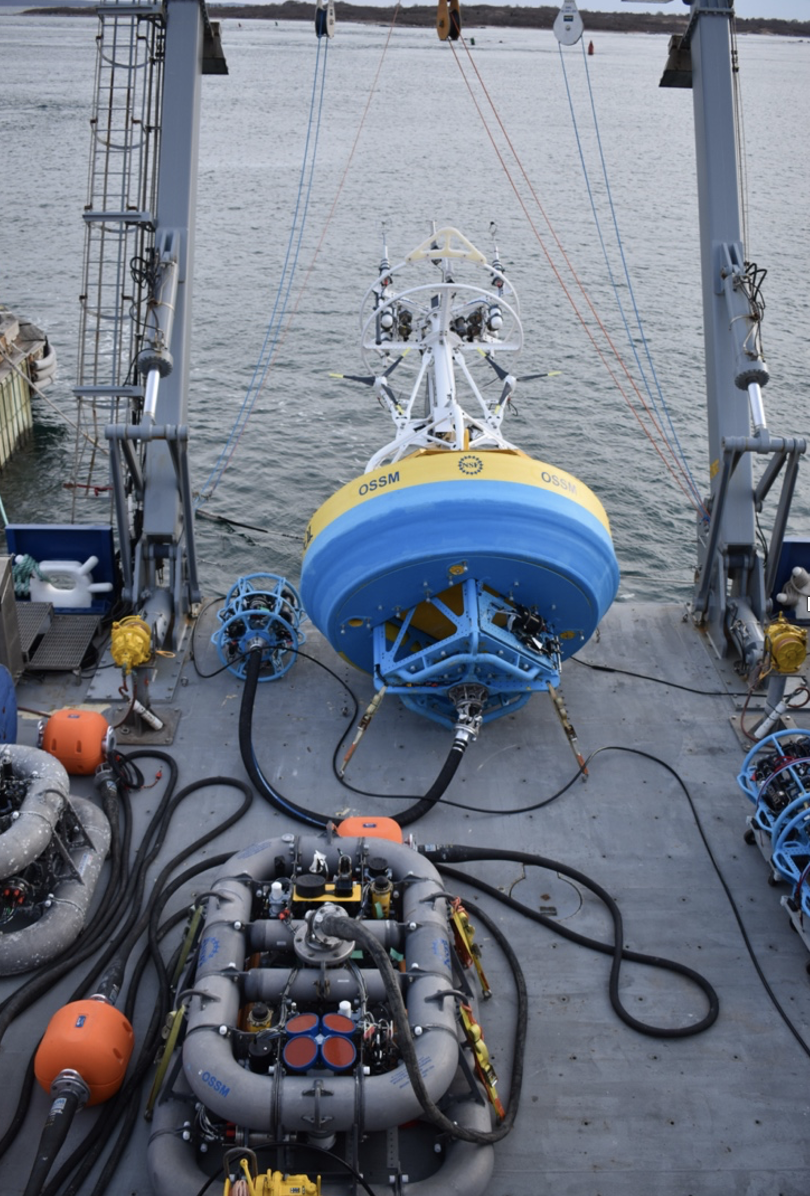
Components of the OOI buoys working in concert make up a system that is designed for deployment in some of the most challenging areas of our world’s oceans. These systems collect valuable scientific data and send it back to Wood Hole Oceanographic Institution (WHOI) servers in near real time. Mechanical riser pieces (wire rope, and/or stretch hoses) moor the buoy to the bottom of the ocean. Foam flotation keeps the buoy above water in even the worst 100-year storm, while its masthead supports instrumentation and satellite radios that make possible the continuous relaying of data. The software controlling the system is just as important as the physical aspects that keep the system operating.
The system software has a variety of responsibilities, including setting instrument configurations and logging data, executing power schedules for instruments and parts of the mooring electronics, controlling the telemetry system, interfacing with lower-level systems including the power system controller, and distributing GPS and timing. The telemetry system is a two-way communication path, so the software controls data delivery from the buoy, but also provides operators with the ability to perform remote command and control.
[caption id="attachment_22938" align="alignnone" width="745"]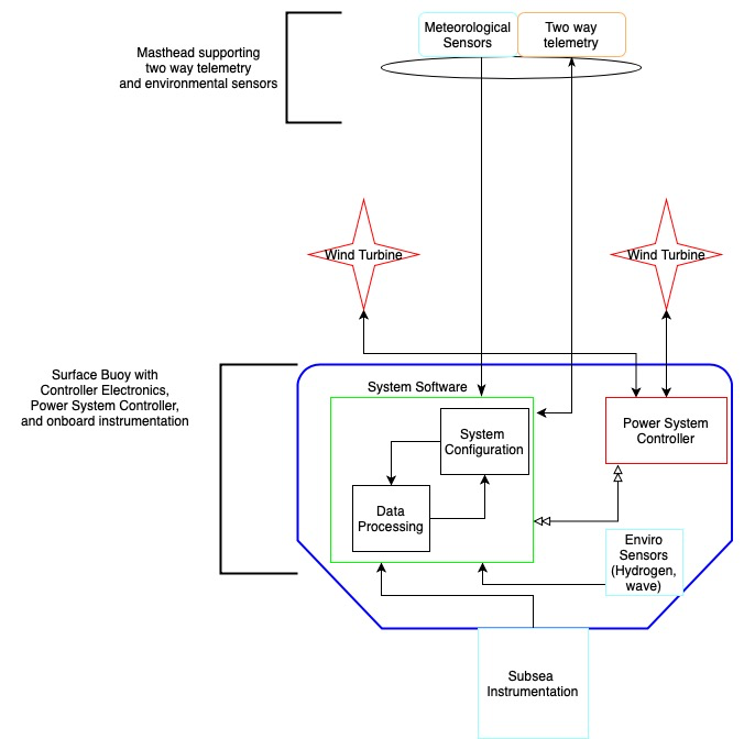 Software flow diagram created by OOI Integration Engineer Alex Franks[/caption]
The unforgiving environment and long duration deployments of OOI moorings lead to occasional system issues that require intervention. Huge storms, for example, can build waves so high that they threaten wind turbines on the moorings. At the Irminger Sea Array, ice can accumulate so much as to drastically increase the weight of the masthead, and with subsequent buoy motion, risk dunking the masthead and instruments. Other mooring functions require constant attention. The charging system must be monitored to ensure system voltages stay at safe levels and hydrogen generation within the buoy itself is kept within safe limits. Two-way satellite communication allows operators to handle decision making from shore using the most up-to-date information from the buoy.
“Since starting in 2015 and following multiple mooring builds and deployments, I’ve realized that issues can rapidly arise at any time of the day or night. I started thinking about what the buoys can do for themselves, using the data being collected onboard,” Franks said.
One of the game-changing upgrades implemented by Franks was to read environmental data and make automated buoy safety decisions in real-time that were previously performed by the team manually. For example, previously, the team would need to monitor weather forecasts and decide preemptively whether changes to buoy operations were advisable. With recent software changes, the system can now change its configuration based on a variety of sensor inputs. These variables include system voltage, ambient temperature, hydrogen levels inside the buoy well, wind speed, and buoy motion (for sea state approximation). In addition to the software updates, the engineering team redesigned the power system controller. They added charge control circuits and the ability to stop the wind turbines from spinning. The software and electrical upgrades now provide redundant automated safeguards against overcharging situations, hydrogen generation, and turbine damage, maximizing buoy operability in harsh environments.
[caption id="attachment_22946" align="alignleft" width="650"]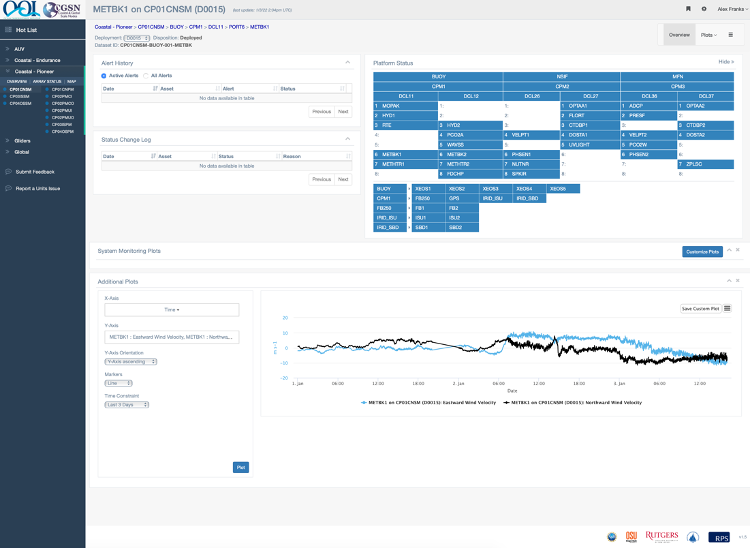 Onshore engineers are able to keep track of Irminger Sea buoys and instrumentation on this new new dashboard.[/caption]
With a largely independent system, operators also needed a way to easily monitor status of the buoys and instrumentation. The software team created a new shoreside dashboard that allows operators to set up custom alerts and alarms based on variables being collected and telemetered by the buoy. While the buoy systems can now operate autonomously, alerts and alarms maintain a human-in-the-loop component to ensure quality control.
As operations and management of the moorings have progressed, the operations team has found opportunities to fine tune how operators and the system handle edge cases of how the system responds to hardware failures and extreme weather. In the past, sometimes conditions changed faster than the data being transmitted back to shore. This new sophisticated software automates some of the buoy’s responses to changing conditions in real time, which helps to ensure their continued operation even under challenging conditions. The decreased response time to environmental and system events using an automated system, coupled with the ability to monitor and interact remotely, has increased the reliability and survivability of OOI moorings.
Read MoreFishers and OOI Scientists Working Together to Advance Science

An article in the Cape Cod Commercial Fishermen’s Alliance newsletter highlighted the work between its members and scientists at Woods Hole Oceanographic Institution (WHOI), using OOI Pioneer Array data. The collaboration resulted in discovery of …“ all these things happening on the New England Shelf that we didn’t anticipate,” said Al Plueddemann, a senior scientist in physical oceanography at WHOI.
An important change in recent years is an increase in the meandering or “wiggliness” of the Gulf Stream. In addition the Gulf Stream has been generating more “Warm Core Rings,” large clockwise eddies.
Read more about how the collaboration is advancing science here.
Two Artists at Sea
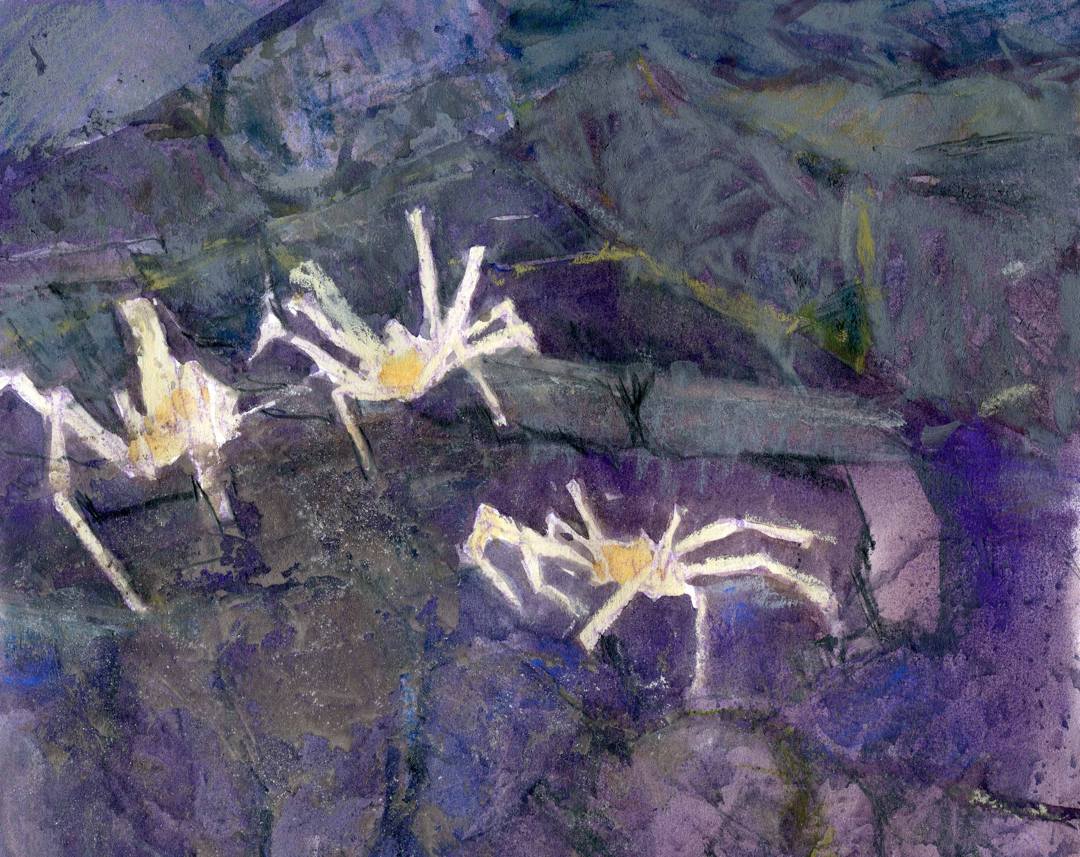
Two artists were aboard the R/V Thomas G. Thompson during this summer’s OOI Regional Cabled Array VISIONS’21 cruise. Undergraduate student Genevieve Kent was leaving the Thompson for Leg 1 of the four-week cruise. Professional artist and lifelong learner, Catherine Gill, was was onboard for Legs 3 and 4 of the summer expedition, including an extra two days at sea while the Thompson was diverted for a rescue mission of two Ocean Exploration Trust remotely operated vehicles (ROVs).
While their physical paths didn’t cross aboard the ship, each spent their time similarly while onboard – serving as a member of the scientific party, taking regular shifts to ensure samples were collected and underwater footage from the ROV Jason was catalogued and archived. They also spent whatever free time they had capturing their experiences in creative endeavors.
Catherine Gill
Because of space limitations on the ship, Gill came equipped with only those supplies that would allow her to draw and paint in very limited space. As a plein air painter, Gill has painted everywhere from in a kayak to in the forest canopy, so she knew what kind of supplies she would need. She brought with her the basics – a standing tripod easel and a small palette. She also brought with her a very small kit that she could keep on her lap and create 5×7 paintings.
“It’s very busy on these legs, but whenever I could find an hour, maybe an hour and a half, I would find a spot on the ship. And I’d set up and do paintings of whatever was happening, putting the new profiler in or pulling up the old one, or capturing some of the very cool stuff on cameras being broadcast by the ROV Jason,” she said. “’I’m sitting there in the Jason control van and watching these scenes that are amazing. There’s different sea life coming from all over the place. The ROV lands on the bottom and you see chimneys and all of the amazing sea life that is down there. It was just incredible.”
Gill painted as things unfolded aboard the Thompson and took screen shots of Jason scenes so she would have a point of reference later on. Regional Cabled Array Principal Investigator Deb Kelley also provided Gill with Jason video that Gill took home to her studio to create bigger paintings of the sea life and Jason operations after she left the ship.
But Gill recounted that she was most at home aboard the ship, painting the experience in real time in “plein air.”
“Because I paint on location, not just from photographs, I know there’s a real difference when you paint from life than when you paint from a photograph. The marks you make are more convincing. If you feel the cold, if you’re aware of the silence, if the wind is blowing on you, you give your painting more than just what your eyes can see,” she explained. But I couldn’t get down to the seafloor to actually paint on location, so having access to video is the next best thing. Having high-definition video to paint from, I can get the feel of what that weird fish is doing, better understand the complexity of those tube worms and deep-sea critters all moving and doing their things, and watch that hydrothermal vent smoking and interacting with the seawater.”
Gill created 13 drawings and paintings while onboard. After her return, she has created another eight to 10 larger-scale paintings. More of her work can be seen on her website, Instagram, and Facebook (Catherine Gill).
Genevieve Kent
Kent, a third-year undergraduate student studying marine biology at the University of Washington, merged her passion for marine science with her artwork while aboard the Thompson. Her interest in marine science was sparked during a seminar class on hydrothermal deep sea vents taught by Kelley. Kent took advantage of the opportunity to participate in a shipboard experience that she learned about in this class to see if she really wanted to pursue a career in marine science.
Kent was accepted to participate in VISIONS’20, but student participation was postponed until 2021 due to COVID restrictions. So, she jumped at the opportunity to sail on the Thompson a year later as part of the VISIONS’21 student contingent.
Her favorite part of the experience was doing shifts in the control van, where her job was to log everything that was happening with Jason as it was used to recover and deploy equipment plugged into the Regional Cabled Array. “I really liked being able to be a part of what was happening. It reminded me a lot of when I was a stage manager for live theater, being in the hot seat and you have to know your role in everything. But it was also really amazing to watch the monitors in real time and see all that was happening there, live and being a part of it.”
Kent works in many mediums from water colors to acrylic paints, to markers, but for this project she chose water colors because they fit the theme of the ocean and can help evoke its many changing moods. While Kent is not a professionally trained artist, she is naturally talented. She used her time in the control van to sketch with colored pencils and capture images of marine life on the bottom that she painted when she returned to her in-home studio.
Once home from the cruise, Kent immediately sat down and started to capture her experiences in watercolors. She used her sketches and images as source material. She is spending as much time as possible on her artwork, as she resumed classes and labs as a full-time student. She has completed several paintings of marine life and has many others in varying stages of completion. Kent can be contacted here.
Plans are in the works to have both artists show their creations at an exhibit at the University of Washington later this spring. A sneak preview is provided below:
[gallery size="large" ids="28987,28988,28989,28990,28991,28992,28993,28994,28995,28996,28997,28998,28999,29000,29001"]
Read More
Tracking Fish with Acoustics
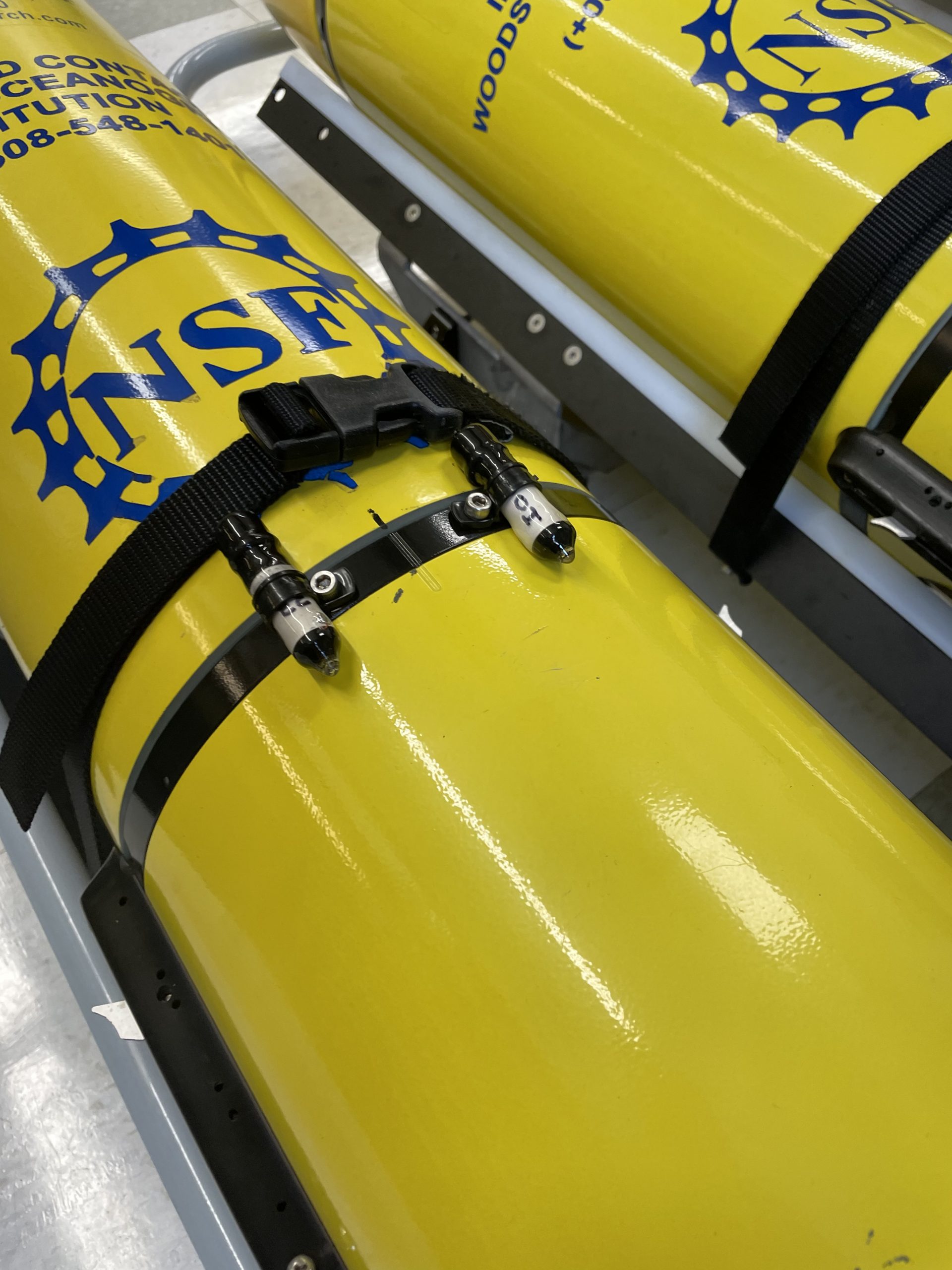
New RAFOS Ocean Acoustic Monitoring (ROAM) tags have recently been designed to allow geolocation of underwater assets, including pelagic fishes, over large areas in the ocean and even deep into the ocean’s twilight zone.
[caption id="attachment_22879" align="alignleft" width="350"]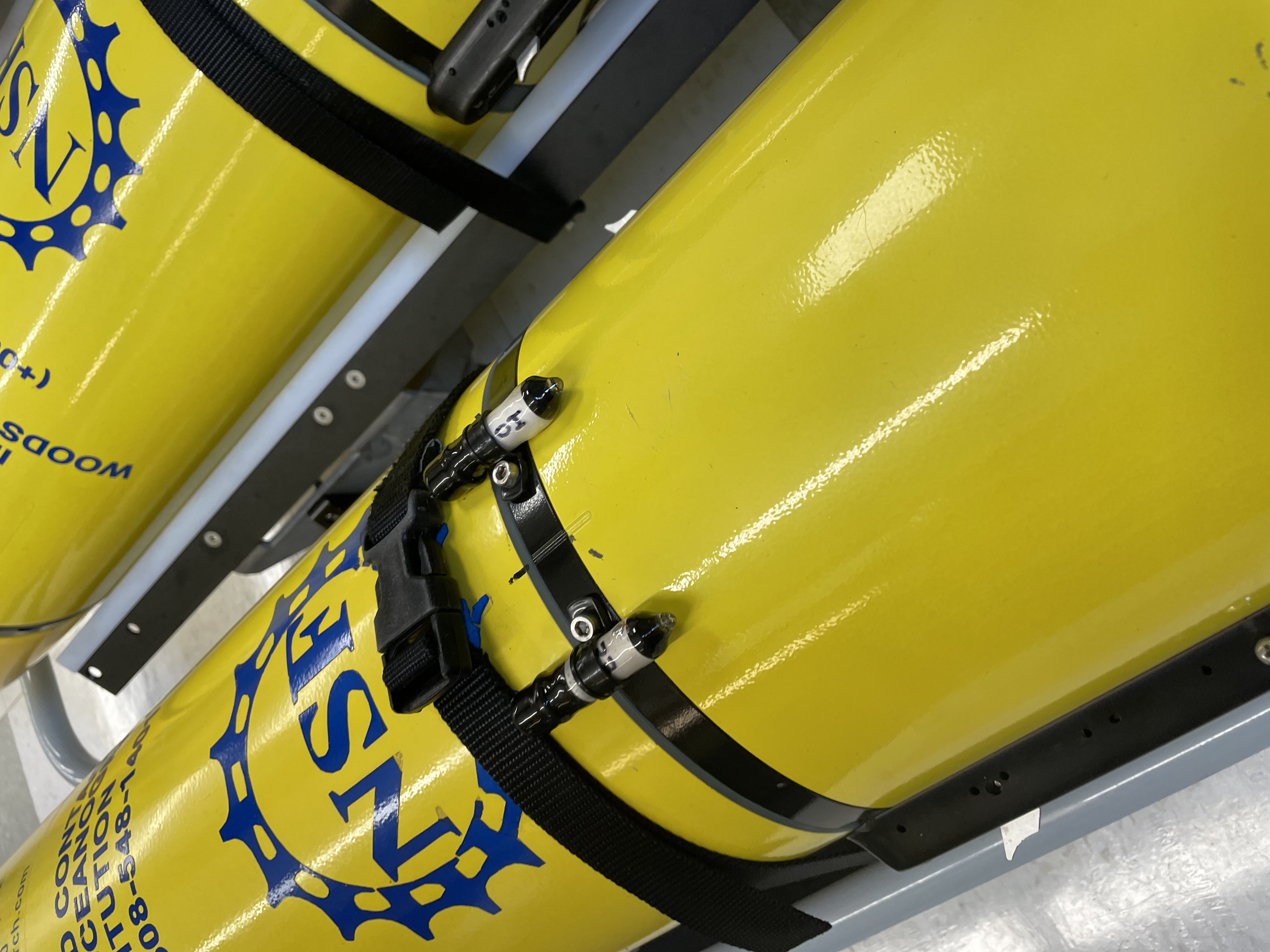 The ROAM tag is small (30 mm x 10 mm) and light enough (8 gm in water) to be attached to an ocean glider with no adverse impacts on performance. Here are two ROAM tags attached to OOI test glider 363 before deployment from the R/V Armstrong during the Pioneer 17 cruise. Credit: ©WHOI, Diana Wickman.[/caption]
An opportunity to test the new ROAM tags arose in conjunction with the October 2021 Pioneer Array mooring service cruise. “We had recently deployed moored sound sources in deep water between Cape Cod and Bermuda,” said Simon Thorrold who, with University of Rhode Island colleagues Melissa Omand and Godi Fischer, is leading the ROAM fish tag development. “One of our goals was to determine whether tagged fish near the continental slope south of New England could be detected using these distant sources.” Thorrold reached out to the OOI team to see if there was potential for a short-term test at the Pioneer Array site, located 75 nautical miles south of Martha’s Vineyard at the shelf-slope interface.
OOI Project Scientist Al Plueddemann and the OOI glider team determined that a glider test planned during the mooring service cruise in late October would be happening at the right place and the right time to be useful for testing the acoustic tags. “This technology is something we would like to consider for OOI, and in particular for the Pioneer Array in its new southern Mid- Atlantic Bight location,” said Plueddemann, “so the potential for a test was of interest to us.”
The glider team determined that the small (30×10 mm), light (8 gm in water) tags would have no measurable impact on glider performance and could be safely accommodated on the test glider. The tags were mounted to the glider by fitting the tags into plastic loop clamps and then securing the loop clamps to existing threaded holes in the glider hull. During the three-day test deployment, the glider made one dive to 50m, one dive to 200m, three dives to 500m, and approximately 76 dives to 200m.
The glider data and acoustic tag data are being evaluated, and will provide information about fish tag performance and the potential for future use within the OOI arrays.
This article was written by Woods Hole Oceanographic Institution colleagues: Senior Scientist Simon Thorrold and Senior Engineering Assistant II Diana Wickman.
Read MoreFunding Opportunity for OOI Education, Workshops, Training Proposals
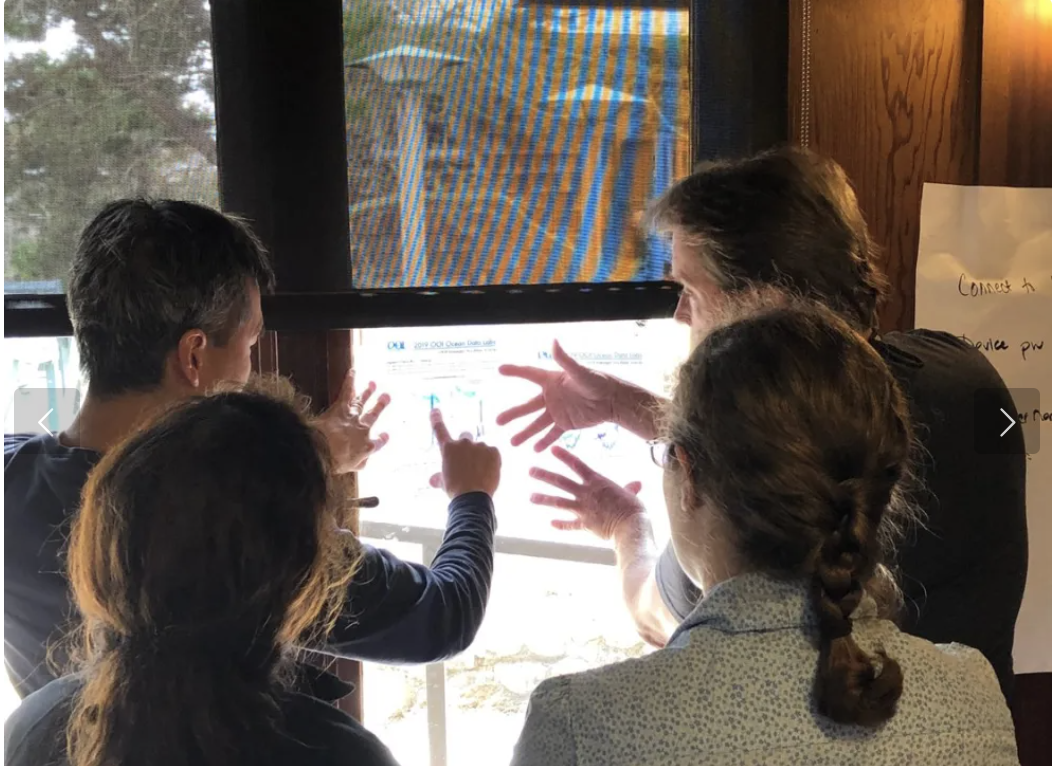
To encourage wider use of OOI data by researchers and educators, the Ocean Sciences Division (OCE) of the National Science Foundation is seeking proposals for projects that use OOI data. Funding is available to support workshops, conferences or other training events that introduce researchers and educators to the type of data available through OOI and community tools that have been developed to use that data.
A Dear Colleague Letter (NSF20-047) issued in early 2020 remains in effect.
“We are seeking to support efforts that teach researchers or educators how to use OOI data and tools, that develop additional tools or instructional materials using OOI data or that serve to create communities of practice to use OOI data for multi-investigator, community-driven research, “ said Elizabeth Rom, an OCE Program Director who oversees a number of NSF educational initiatives.
At a recent town hall of the Ocean Observatories Initiative Facility Board at the AGU Fall Meeting, Rom presented a progress report on proposals funded since May 2020. These include:
- Two Ocean Hack weeks held at the University of Washington and Bigelow Laboratory for Ocean Sciences. In 2020, the workshop was virtual, in 2021 the workshop was a hybrid.
- OOI Biogeochemical Data Workshop, which consisted of an online meeting in July 2021 and plans for an in-person meeting for June 2022 at Woods Hole Oceanographic Institution.
- K12 OOI Workshop Series that involves the South Kitsap School District in Washington state and Deb Kelley at the University of Washington. The goals of the workshop series are to develop teacher cohort and lesson plans using OOI data in classrooms. The series launched in early December with virtual and in-person sessions planned throughout 2022.
She also reported on progress in course development, including support of a second cohort of faculty to develop version 2 of the Ocean Data Lab’s online manual, microbial monitoring using OOI RCA remote samplers at Axial Seamount, and development of instructional materials and piloting assessment instruments to explore undergraduate scientific literacy. NSF programs GeoPaths (Pathways into the Earth, Ocean, Polar and Atmospheric and Geospace Sciences) and Research Experiences for Undergraduates (REU) sites also provided opportunities for using OOI data. An initiative to broaden the scope and increase the efficacy of the SERC Discovery System was supported, as were multiple REU student projects in 2020 and 2021.
“While COVID served to discourage in-person meetings and workshops, we were pleased that so many innovative approaches were proposed,” added Rom. “Hopefully in 2022, we will have opportunities to for virtual, hybrid and in-person workshops, and certainly the innovation of this community will shine through.”
Two- and four-year U.S. institutions of higher education and U.S. non-profit non-academic organizations are eligible to submit proposals. Proposals may be submitted at any time, but Principal Investigators are encouraged to submit at least six months prior to the planned event. Submission details are available here. While the DCL refers to Fiscal Year 2020, it continues to be in effect until canceled.
Read MoreCall for Lightning Talks at OOIFB Town Hall
The Ocean Observatories Initiative Facilities Board (OOIFB) will host a Town Hall at the 2022 Ocean Sciences Meeting (OSM) on Friday, February 25th from 12:00 pm to 1:00 pm Eastern Time. The meeting will be fully virtual. The community will have the opportunity to hear the latest information about the OOI facility, Pioneer Array relocation plans, early career scientists’ activities, and education updates.
The Town Hall also will include a series of lightning presentations where scientists are invited to present one slide in one minute explaining how they have used (or plan to use) freely available observatory data in their respective research. OOIFB invites all to consider presenting a slide in the lightning session.
Time during the Town Hall is limited and about six lightning talks will be scheduled during the Town Hall. However, all submitted lightning talks will have the opportunity to be presented during the Ocean Sciences Meeting. The OOIFB has teamed with the OOI’s virtual booth team to offer a time slot during the meeting to highlight all of the lightning talks.
Sign-up Now to Present a Lightning Talk – If you are using observatory data and wish to present a lightning talk during the Town Hall, please apply using the: LIGHTNING TALK FORM by February 9th. From the applications submitted, OOIFB will select six lightning talks for the Town Hall that can highlight the exciting research that is being done across the entire OOI Facility.
Funding Available for OSM Registration Fee – Please note, all participants and presenters during the OOIFB Town Hall must be registered for the 2022 Ocean Sciences Meeting. Funding is available to offset the registration fee for students and early career scientists (ECS) who are presenting a lightning talk. Funding is limited and the first 20 student/ECS applications will be considered for reimbursement. The Lightning Talk application form includes space for requesting OSM registration reimbursement.
The workshop is aimed at researchers who are using or are considering using OOI data and/or adding instrumentation to OOI infrastructure and educators at all levels interested in using data from the OOI’s Arrays. Hope to see you at the OOIFB Town Hall!
Event: OOI Facility Board Town Hall
When: Friday, February 25th from 12:00 pm to 1:00 pm Eastern Time
Lightning Talks: Apply online. The form will be open until February 9th.
Where: Participation will be virtual and available to individuals registered for the Ocean Sciences Meeting.
The Town Hall agenda and additional details are available here.
OOI Data System User Survey: Opportunity to Provide Feedback
The OOIFB Data Systems Committee needs your help in evaluating new Ocean Observatories Initiative (OOI) data systems. In 2019 the OOI Facility Board’s Data Systems Committee (DSC) conducted a survey to learn how the OOI could better serve data to users. In response to the feedback received, the OOI program developed the Data Explorer, a refined and more capable interface for finding and accessing data. Now, the DSC is interested to hear your thoughts on this new data system, as well as the other available systems, and to uncover potential ways of improving data access for users.