
HPIES
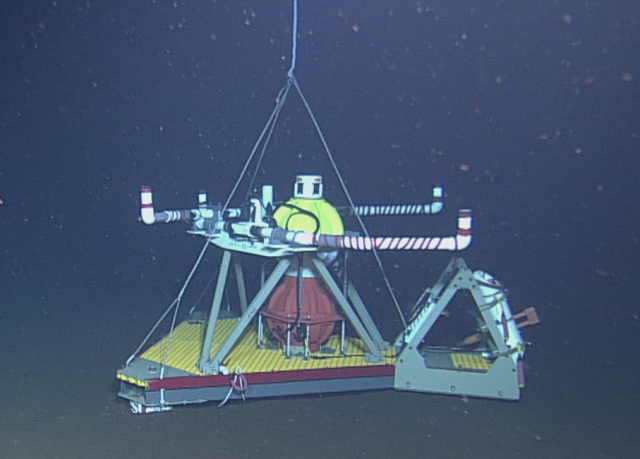
The Horizontal Electric Field, Pressure and Inverted Echo Sounder (HPIES) is an instrument that utilizes a bottom pressure sensor, a 12-kHz inverted echosounder, and a horizontal electrometer to measure the horizontal electrical field, the bottom pressure, and the vertical acoustic travel time from the sea floor to the sea surface. These properties provide insights into the vertical structure of current fields and water properties including temperature, salinity, and specific volume anomaly, separation of sea surface height variation and temperature, and near-bottom water currents.
(text and images courtesy of Interactive Oceans)
Read MoreCAMHD
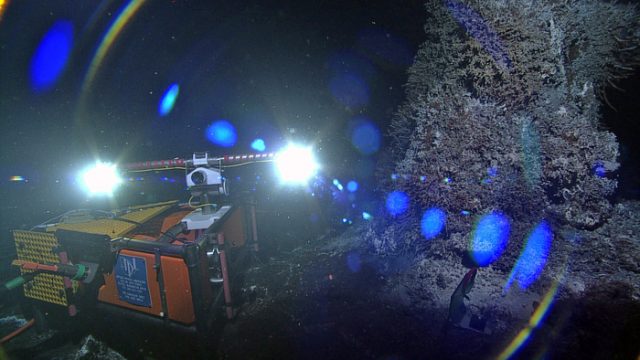
The high definition camera is a SubC 1Cam video camera adapted for use on the OOI cabled observatory by Cabled Array engineers at the University of Washington’s Applied Physics Laboratory. An ~ 4 km extension cable runs from the camera at the ASHES vent field on Axial Seamount to Primary Node PN3B, and from there it is streamed at the speed of light over 521 km of backbone submarine fiber optic cable to the shore station in Pacific City, OR.
The camera includes pan, tilt and zoom capabilities and transmits an uncompressed video stream at 1.5 Gbs in real-time to shore at a resolution of 1920×1080 pixels, 60 frames per second, interlaced. The shorthand notation for this mode is 1080i60.
SubC Aquorea LED’s lights provide ~4800 Lumens each, more than enough to light up the actively venting hydrothermal chimney called Mushroom. The lights are typically run at 75% and are controllable to any level using serial communications.
The camera assembly hosts a ROS PT-25 rotator with a mechanical assembly on top and a light bar that holds the camera and attitude sensor directly above the pan/tilt and lights that are located feet apart from each other on either side of the light bar.
HD video is being utilized to examine the evolution of the metal sulfide chimney over time and the flow of fluids out of the chimney. Time-series imagery is utilized to examine animal behavior and changes in animal and microbial colonization associated with changes in fluid flow, temperature and chemistry in response to seismic and volcanic events.
(text and images courtesy of Interactive Oceans)
[twocol_one]
[button align="center" link="/streaming-underwater-video/" bg_color="#00a9dd" border="#004377" class="bigbutton"]Live Video from Axial Seamount[/button]
[/twocol_one]
[twocol_one_last]
[button align="center" link="https://rawdata.oceanobservatories.org/files/RS03ASHS/PN03B/CAMHDA301/" bg_color="#00a9dd" border="#004377" class="bigbutton"]Video Archive[/button]
[/twocol_one_last]
PPSDN
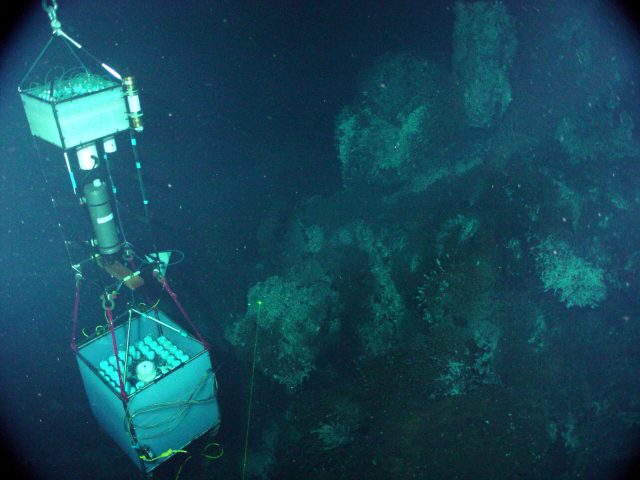
The Particulate DNA Sampler filters a volume of seawater and preserves the particulate matter for genetic analysis of microbial communities after the instrument is recovered. The RAS (Remote Access Sampler) allows time-series temperature measurement in real-time and in situ sampling of hydrothermal vent fluids, while the PPS (Phytoplankton Sampler) allows filtering and preservation of microbial DNA. This coupled system, developed by D. Butterfield at NOAA-PMEL, is now installed in the International District Hydrothermal Vent Field and cabled to the Primary Infrastructure. Because it is cabled, which allows two-way communication and power, the sample bottles can be triggered from shore in response to volcanic or tectonic events.
(text and images courtesy of Interactive Oceans)
Read MoreOBSBB
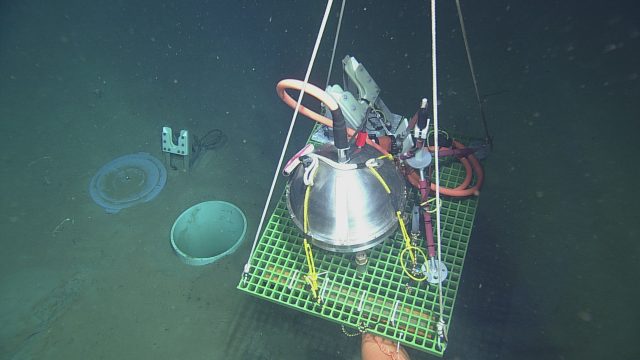
Broadband Ocean Bottom Seismometers provide characterization of seismicity/earthquake activity along tectonic plate boundaries where two key phenomena can occur: large-magnitude subduction zone earthquakes and seismicity associated with migration of melt (magma) beneath the seafloor at underwater volcanoes. The array of OOI broadband seismometers are primarily installed to detect earthquakes along the subduction zone of the Oregon margin and at Axial Volcano. Because the seismometers are cabled and, hence, connected directly to shore, they can provide detection of earthquakes in real-time.
The sensors are in a titanium housing, and in sedimented areas (Slope Base, Southern Hydrate Ridge, and at the base of Axial Seamount), the seismometers are buried beneath the seafloor sediments in 60 cm deep X 60 cm diameter caissons (cylindrical retaining structures filled with silica beads) to obtain the highest quality resolution of seismic waves. At the summit of Axial Seamount, there is little sediment, and therefore the broadband seismometer was installed on basement rock, and surrounded by gravel-filled bags.
Instrument Specifics: The broadband seismometers are manufactured by Guralp, instrument model Guralp CMG-1T 360s-50Hz with CMG-5T Strong Motion, DM24/7-EAM Digitizer/Interface + Low Frequency Hydrophone (HTI-90-U). They have an Ethernet (10/100) interface, and are synced to pulse per second timing.
(text and images courtesy of Interactive Oceans)
Read MoreOBSSP
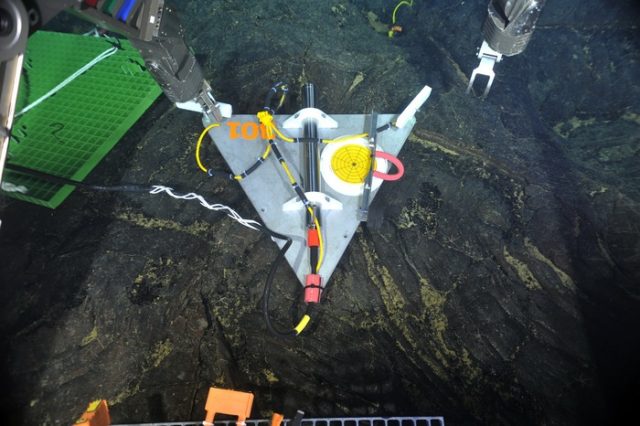
Short-Period Ocean Bottom Seismometers detect vibrations from small earthquakes ranging from 0.1 Hz to 100 Hz. These earthquakes are caused by local phenomena, such as melt movement beneath volcanoes and upward flow of hydrothermal fluids in the conduits that feed black smoker chimneys. These instruments enable imaging of the seismic energy traveling through the seafloor.
All instruments are streaming data live to IRIS (Incorporated Research Institutions for Seismology), and are available to the public. Daily and hourly updates on the number of earthquakes occurring at Axial Seamount can be accessed through Dr. William Wilcock’s website, one of several Community Tools that users have created.
(text and images courtesy of Interactive Oceans)
Read MoreOPTAA
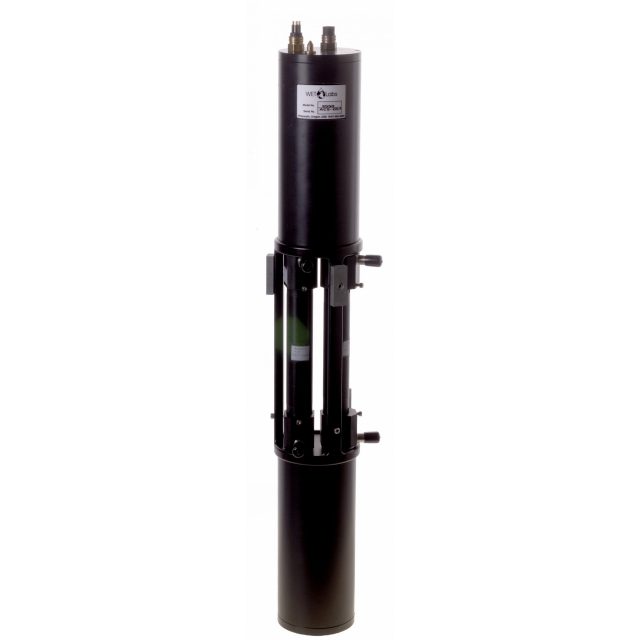
A Spectrophotometer measures optical attenuation and absorption by characterizing the way seawater absorbs and scatters light. These combined measurements indicate sample turbidity. Optical absorption and attenuation instruments, like the Sea Bird AC-S instrument used by OOI, allow total scattering to be derived for living and detrital particles in the ocean.
Read MoreOSMOI
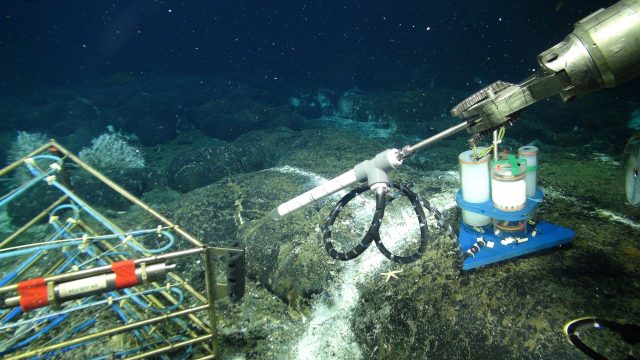
The Osmosis-Based Water Sampler provides long-term sampling of diffuse and/or pore fluids at the seabed by drawing those fluids into small-bore, capillary tubing. The instrument currently deployed at Southern Hydrate Ridge samples pore fluids associated with methane seeps, while the instrument at the ASHES vent field on Axial Seamount is collocated with the 3-D Temperature Array (TMPSF) and samples diffuse fluids associated with hydrothermal flow. After instrument recovery, laboratory analyses provide major/trace element chemistry of these fluid samples.
The laboratory processed analytical data and metadata from the fluid samples can be found in the OOI Core Instrument Analytical Results data repository.
(text and images courtesy of Interactive Oceans)
Read MorePARAD
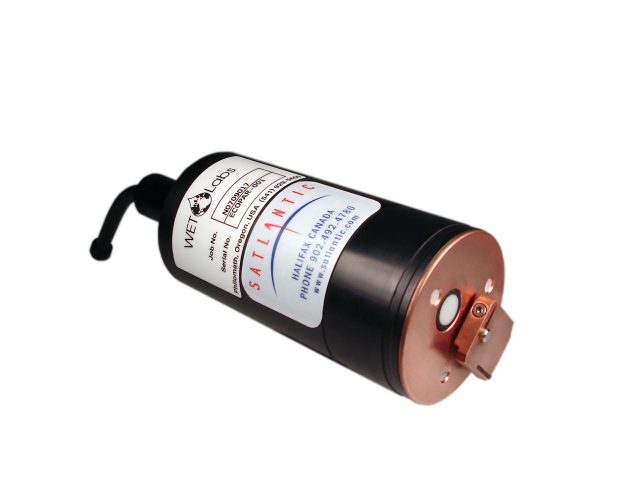
A Photosynthetically Active Radiation (PAR) sensor is used to measure the spectral range of light that is available in the water column for use by primary producers for photosynthesis (400-700 nanometers), and how that varies over time and depth in the water column. Chlorophyll, the most abundant plant pigment in land plants and in ocean phytoplankton, is most efficient at capturing red and blue light.
Read MorePCO2A
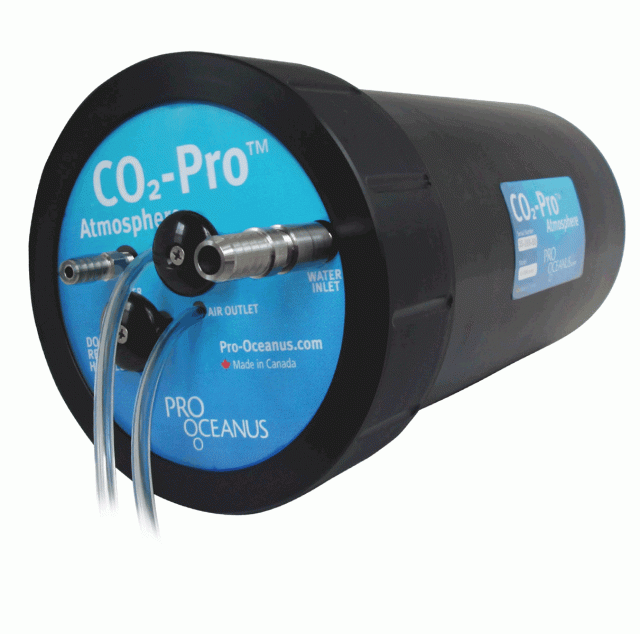
Located at the sea surface, the pCO2 Air-Sea sensor measures the partial pressure of carbon dioxide (pCO2) in both the atmosphere and ocean. The Pro-Oceanus CO2-Pro Atmosphere instrument is comprised of a CO2-Pro that mounts beneath a buoy for water measurements, connected to a NEMA box that is used to take in air from above the buoy. Alternating measurements of pCO2 in air and water made with the same detector ensure a high level of accuracy for reliable calculations of CO2 flux.
The OOI Level 1 Partial Pressure of CO2 in Air and Surface Seawater core data products (PCO2ATM and PCO2SSW) are created by converting the Level 0 CO2 Mole Fractions (XCO2ATM or XCO2SSW, in ppm), into μatm units by using an equation that incorporates the L0 Gas Stream Pressure (PRESAIR, in mbar). The instrument computes the xCO2 value internally by measuring the infrared absorbance level of CO2 and compensating for the measured pressure, temperature, and humidity. The Level 2 flux of CO2 across the air-sea interface (L2 CO2FLUX data product) is computed from in situ measurements of the partial pressures of carbon dioxide in both the surface ocean and the overlying air. The flux is then estimated as proportional to the difference of these partial pressures. The proportionality factor is parameterized using the wind speed, and sea surface temperature and salinity are used to further adjust this factor. See data product specifications (linked below) for computational details.
Read MorePCO2W
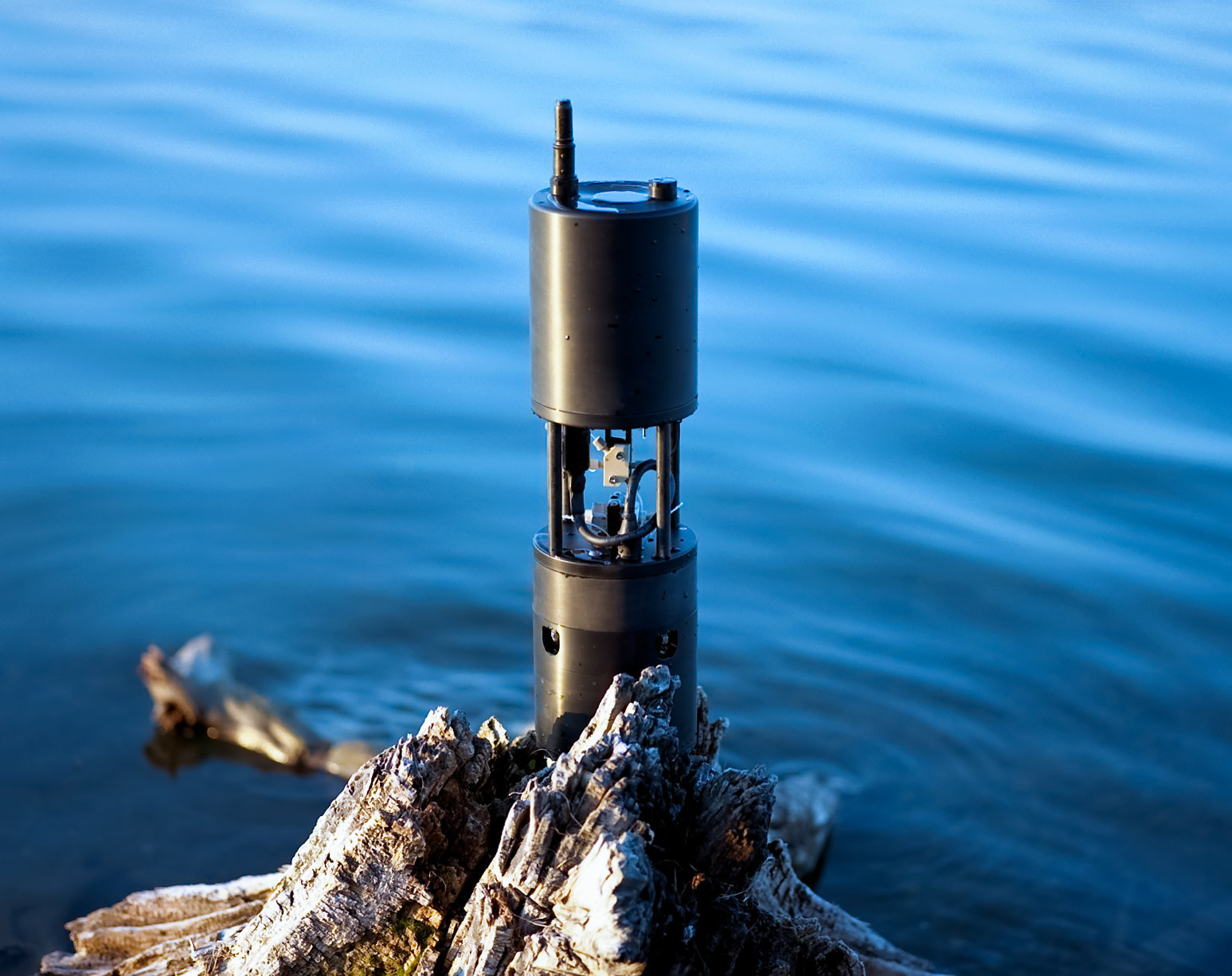
The OOI pCO2 sensor (Sunburst SAMI-CO2) measures the partial pressure of carbon dioxide (pCO2) from 150-700 μatm in the upper 200 m of the water column. The distribution of pCO2 is dependent on: (1) increases due to gas exchange with the atmosphere at the ocean surface, (2) removal by photosynthesis, (3) removal by calcium carbonate formation, (4) removal by solar heating, (5) increases from breakdown of plant material by microbial processes, and (6) addition due to dissolution of calcium carbonate. Calcium carbonate minerals are the building blocks for the skeletons and shells of many marine organisms, such as oysters. Carbon dioxide concentrations are increasing in the atmosphere due to the use of fossil fuels, and the increase in atmospheric CO2 is about 30 times higher than at any time in the past geological history of the Earth. The oceans are absorbing about 30% of the atmospheric CO2, resulting in a shift in seawater acid-base chemistry and a decrease in ocean pH (more acidic). These chemical changes are termed “ocean acidification”.
(some text courtesy of Interactive Oceans)
Read More