
Posts Tagged ‘Plankton Imaging Flow Cytobot’
IFCB Webinar #2 Highlights: Lessons from Time/Moored-Based IFCB Observations
The second webinar in the Ocean Observatories Initiative Facility Board (OOIFB) four-part IFCB webinar series focused on time/moored-based Imaging FlowCytobot (IFCB) deployments and the challenges of operating IFCBs on sustained ocean observing platforms.
The webinar speakers were Kylene Cooley, Woods Hole Oceanographic Institution (WHOI), who leads IFCB operations for the OOI Pioneer Mid-Atlantic Bight (MAB) Array, and Kasia Kenitz, Southern California Coastal Ocean Observing System, who discussed IFCB operations on the Del Mar Mooring in the California IFCB Network. Both shared practical lessons from deploying and maintaining IFCBs in long-term, moored observing systems.
Cooley shared lessons from deploying IFCBs on the Pioneer MAB Array, where the instruments operate for extended periods with limited physical access and satellite communications. She discussed the importance of preparing and testing the IFCB before deployment, including pressure and power testing, instrument burn-in, automatic startup configuration, and coordination with the mooring team. She also described challenges encountered during deployments, including biofouling, power supply issues, instrument alignment, and weather conditions that can limit access to the moorings.
Kenitz described IFCB operations on the Del Mar Mooring, where the instrument is solar-powered and uses cellular communications for near-real-time data transfer and remote monitoring. Increased solar capacity has allowed the IFCB to sample more frequently, moving from every three to four hours to every one to two hours. She also discussed challenges with operating the IFCB alongside other sensors, including mechanical pump noise that can interfere with velocity measurements. Both presentations highlighted the importance of routine cleaning, antifouling measures, remote monitoring, and pre-deployment testing for long-term IFCB deployments.
The remaining webinars in the series will focus on space/ship-based IFCBs and experiments and lab-based studies. To learn more, view webinar recordings, and find upcoming dates, visit the OOIFB webpage.
Read MoreIFCB Webinar #1 Highlights: Building Community and Best Practices for Ocean Observations
The first IFCB webinar in a new community-driven series brought together researchers and operators to share knowledge, practical guidance, and future plans for Imaging FlowCytobot (IFCB) applications.
The webinar series, hosted by the Ocean Observatories Initiative Facilities Board (OOIFB), was inspired by a 2025 IFCB focus group and aims to strengthen collaboration around IFCB and Ocean Observatories Initiative (OOI) images and data products (access links here). Organizers outlined plans for future sessions, including topics such as moored IFCB deployments and applications on the OOI Pioneer Array, as well as the development of teaching resources and a community manuscript.
The focus of the first webinar was best practices for IFCB operation and deployment. The speakers emphasized that successful use begins with thorough training and hands-on experience in laboratory settings. From there, considerations expand to include water delivery systems, power and communication integration, and consistent system monitoring, especially for shore-side, shipboard, and offshore mooring deployments. Post-deployment care, including data backup, system checks, and routine maintenance, was highlighted as essential for long-term instrument performance.
Tom Fougere of McLane Research Laboratories emphasized the importance of reliable infrastructure (especially water flow, power stability, and communications) for shipboard and shore-based IFCB operations, while Dr. Sophie Clayton of the National Oceanography Centre (NOC) highlighted a best practices guide from the Operational Phytoplankton Observations Working Group addressing key challenges in phytoplankton imaging, including metadata standards, data management, uncertainty, and instrument diagnostics. Together, these perspectives reinforced that robust metadata capture, standardized workflows, and proactive maintenance are essential for producing high-quality datasets, alongside careful attention to calibration, system cleaning, and sampling strategies in low-density environments.
To learn more and view upcoming topics and dates for the next IFCB webinars, visit the OOIFB webpage.
OOIFB Focus Group Highlights the Power of the Imaging FlowCytobot
Back in 2021, a series of community-driven Innovations Labs helped shape the scientific priorities for the relocation of the OOI Pioneer Array from the New England Shelf to the Mid-Atlantic Bight (MAB). One high-priority request that emerged was phytoplankton imaging, essential for advancing our understanding of biogeochemical cycling and ecosystem responses.
To meet that need, the OOI deployed a state-of-the-art Imaging FlowCytobot (IFCB) on the Pioneer MAB Central Surface Mooring in April 2024. This oceanographic sensor merges flow cytometry and video imaging to capture high-resolution images of microscopic aquatic life (mainly phytoplankton) while also recording key properties like chlorophyll fluorescence and light scattering. After running for a full year, the instrument was recovered in April 2025, and its data are now publicly available to researchers and educators alike.
Goals and Activities of the 2025 Focus Group
To engage the research community with this unique data collection tool, the U.S. National Science Foundation OOI Facility Board (OOIFB) hosted a 2.5-day Focus Group from June 18–20, 2025, at the University of North Carolina Wilmington’s Center for Marine Science. The goal was to build a community of practice around the new IFCB deployment, showcasing its potential and offering hands-on opportunities for the ocean science community to engage with this cutting-edge technology.
Roughly 30 participants gathered for a deep dive into all things IFCB. The event kicked off with an introduction to the technology itself and its integration with OOI infrastructure. Participants then explored real-world research applications of IFCB data, followed by tutorials on how to access, download, and work with these datasets using the IFCB dashboard interface.
Attendees used Python, MATLAB, and R coding environments to visualize and analyze IFCB data, tackling a range of scenarios that revealed both the strengths and limitations of these data products. The format allowed users to compare workflows and troubleshoot in real time, promoting collective problem-solving and peer learning.
Roundtable discussions between participants and OOI Program Managers helped clarify what the IFCB community needs from the data and the associated tools. From those conversations, ideas emerged for future resources like shared GitHub repositories, use-case-driven tutorials for students, and dedicated forums to continue building community momentum.
Community Engagement
This focus group showcases how OOI actively fosters community engagement, especially when introducing new scientific capabilities. By building meaningful “on-ramps” for users to access data, apply new methods, and contribute to shared tools, OOI is cultivating a collaborative research environment. These events bring people together across disciplines and career stages, helping to democratize access to oceanographic data. They foster shared ownership, letting researchers shape how OOI data is used and understood.
By fostering a culture of open access and technical sharing, the focus group strengthened the foundation of a growing IFCB user community, one capable of advancing our understanding of marine ecosystems at the microbial level. The IFCB is a catalyst for connection, discovery, and long-term scientific collaboration.
[gallery size="large" ids="36719,36720,36721,36722,36723"] Read MoreOOIFB Imaging FlowCytobot (IFCB) Community Focus Group
The NSF-funded Ocean Observatories Initiative Facility Board (OOIFB) will host an Imaging FlowCytobot (IFCB) Community Focus Group from June 18-20, 2025, at the University of North Carolina, Wilmington’s Center for Marine Science. The OOIFB would like to convene ~ 25 members of the IFCB community to engage in:
- An introduction and overview of the OOI-IFCB instrument and its data, demonstrating how users can access and download OOI data (example IFCB data products will be shared).
- Guided tutorials and hands-on exercises working with use-case scenarios.
- Key conversations about IFCB community expectations for the NSF OOI (infrastructure and data), and what the NSF OOI expectations may be for the community.
Historic, Continuing Collaboration
The U.S. National Science Foundation Ocean Observatories Initiative (NSF-OOI) and the Northeast U.S. Shelf (NES) Long-Term Ecological Research (LTER) project have been collaborating since 2017, when the original OOI Coastal Pioneer Array was deployed 75 nautical miles off the coast of Martha’s Vineyard. Representatives from the NES-LTER project would join the Pioneer Deployment and Recovery expeditions in this region for their spring and fall seasonal cruise. Their work includes deploying an Imaging FlowCytobot (IFCB) to sample continuously from the ship’s underway science seawater while OOI cruises were underway.
An IFCB is an in-situ automated submersible flow cytometer that generates images of particles taken from the aquatic environment. Designed and built by researchers at Woods Hole Oceanographic Institution (WHOI), the IFCB has since become commercially available through McLane Research Laboratories.
“IFCB enables us to study the phytoplankton and microzooplankton inhabitants of a given region. We can see what plankton are present over time and how the community structure adjusts to changes in the ecosystem,” explained Taylor Crockford, a WHOI researcher who regularly deploys IFCBs. “NES-LTER conducts four seasonal cross-shelf surveys per year studying the food web and physical properties of the surface waters and water column from near shore to the shelf-slope break, which includes the location of the original Pioneer Array. Now that the Pioneer Array is moving south, we are excited to have the opportunity to continue this collaboration and build upon our understanding of the planktonic communities in the region.”
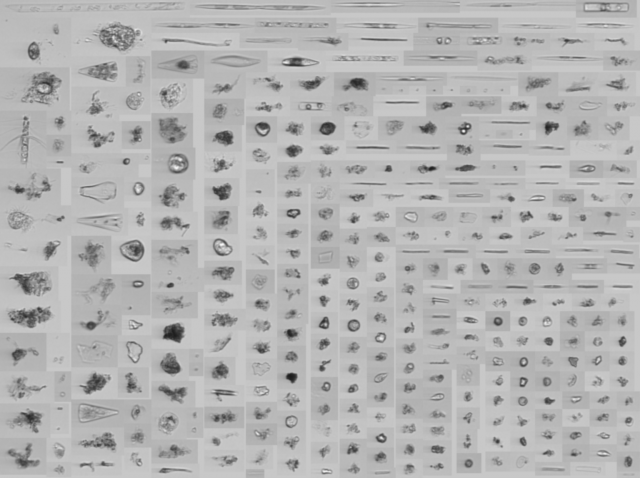
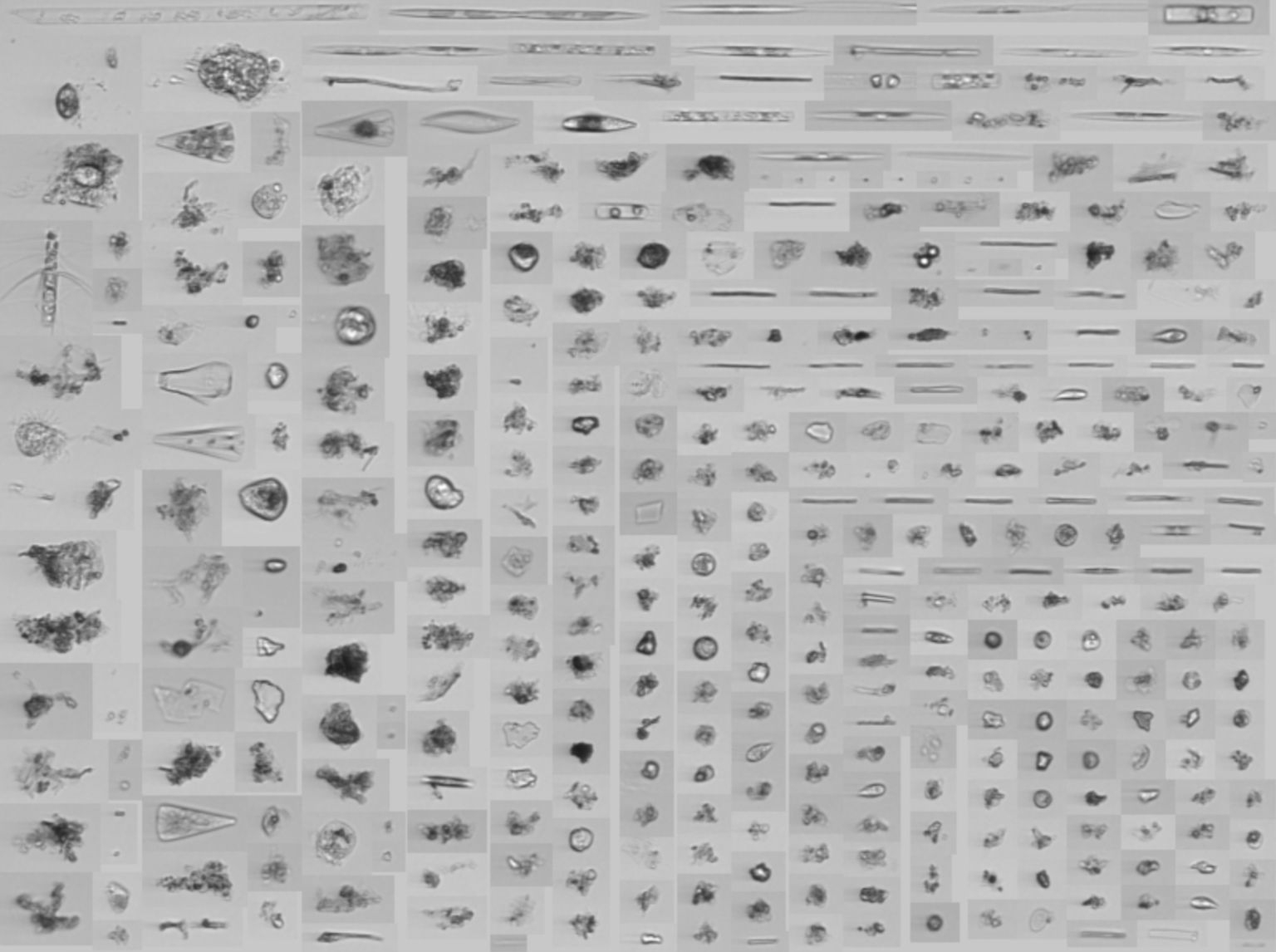
[media-caption path="https://oceanobservatories.org/wp-content/uploads/2024/04/Cytobot-image.png" link="#"]A glimpse at the diverse plankton community IFCB is currently seeing today (April 2, 2024) during the transit south to the new MAB Pioneer location. Credit: Taylor Crockford © WHOI. [/media-caption]During the initial deployment of the Coastal Pioneer Array at the Mid-Atlantic Bight (MAB), this collaboration continues. Crockford is aboard the R/V Neil Armstrong and using an IFCB to collect data as part of the project’s broadscale study region (ongoing since 2013) while the ship transits to and from the new deployment site off the coast of Cape Hatteras, NC.
When the ship and team arrive at Pioneer’s new location, she will be lending her expertise to the deployment team for it is the first time a Plankton Imaging System (PLIMS) is being deployed on one of Pioneer’s Central Surface Moorings. This new deployment is an outcome of community input during an NSF and Ocean Observatories Initiative Facility Board sponsored workshop in 2021.
Read More