Posts by Amber Coogan
The Pacific Northwest’s most active underwater volcano is getting ready to erupt

Three hundred miles off the coast of Oregon and more than 4,900 feet below the surface of the Pacific Ocean, one of the Pacific Northwest’s least famous — but most active — volcanoes is showing signs that it will soon erupt for the first time since 2015.
Read more from the University of Washington’s College of the Environment.
Read MoreBiofouling Preventatives on Surface Mooring Instrumentation
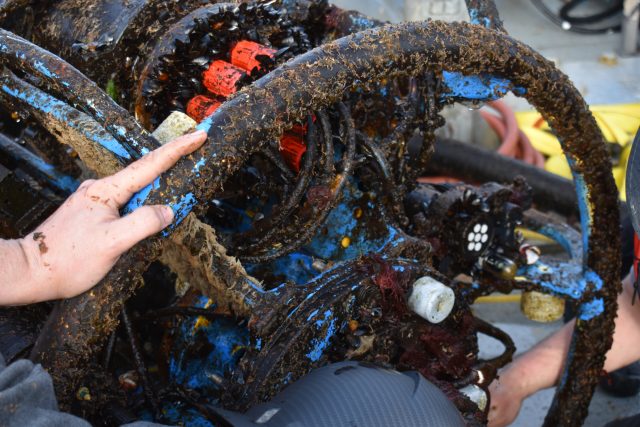
During the first leg of Pioneer 21, the team recovered the three surface moorings deployed in the Mid-Atlantic Bight (MAB) region, including the associated Multi-Function Nodes (MFNs) and Near-Surface Instrument Frames (NSIFs). Upon recovery, the state of the instrumentation at these sites showcased the effectiveness of biofouling mitigation strategies employed during this past year long deployment in the MAB region.
Biofouling — the accumulation of marine organisms such as algae, barnacles, and tube worms — is a challenge for sustained ocean observations. Unchecked growth can obstruct sensor faces, degrade data quality, and damage equipment. While complete prevention is rarely possible over extended deployments, targeted mitigation techniques can significantly limit biological overgrowth on critical sensing surfaces.
The following examples illustrate both the extent of biofouling on non-critical surfaces and the relative success of antifouling methods used to protect sensor interfaces:
[caption id="attachment_36259" align="alignnone" width="640"] The seven white wavelength band sensing points of the Spectral Irradiance sensor (https://oceanobservatories.org/instrument-class/spkir/) in this image had been kept free from biofouling by a neighboring UV light that had been carefully positioned to illuminate the sensing region during throughout deployment. (c): Sawyer Newman, WHOI[/caption]
[caption id="attachment_36260" align="alignnone" width="640"]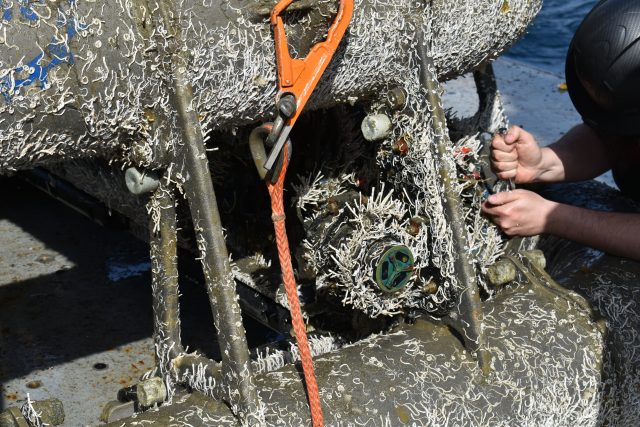 This photo shows a Fluorometer (FLORT) (https://oceanobservatories.org/instrument-class/fluor/) mounted to the SOSM-1 MFN used for turbidity sensing. This sensor face was kept clear from fouling by a rotating wiper. In contrast, tube worm growth is visible on non-sensing portions of the FLORT and adjacent structural elements of the MFN. (c): Sawyer Newman, WHOI[/caption]
[caption id="attachment_36261" align="alignnone" width="360"]
This photo shows a Fluorometer (FLORT) (https://oceanobservatories.org/instrument-class/fluor/) mounted to the SOSM-1 MFN used for turbidity sensing. This sensor face was kept clear from fouling by a rotating wiper. In contrast, tube worm growth is visible on non-sensing portions of the FLORT and adjacent structural elements of the MFN. (c): Sawyer Newman, WHOI[/caption]
[caption id="attachment_36261" align="alignnone" width="360"]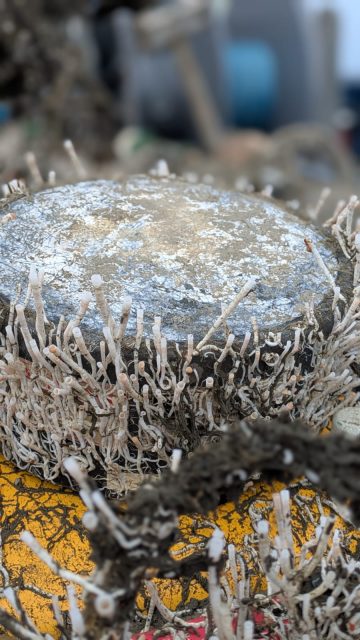 Zinc oxide cream (specifically, commercial diaper rash cream) was applied to the sensor faces of ZPLSCs (https://oceanobservatories.org/instrument-class/zpls/) prior to deployment. This image shows tube worm growth on the non-sensing parts of the ZPLSC, while the round sensing area, coated with zinc oxide, remained clear of biological growth. (c): Sawyer Newman, WHOI[/caption]
These observations underscore the importance of selecting and applying biofouling prevention strategies tailored to each sensor’s operational context and sensitivity. The recovery and evaluation of these assets offer critical feedback for ongoing sensor maintenance and instrument integration modifications.
Read MoreProf. Jack Barth Named Principal Investigator of the Ocean Observatories Initiative Cyberinfrastructure Data Center
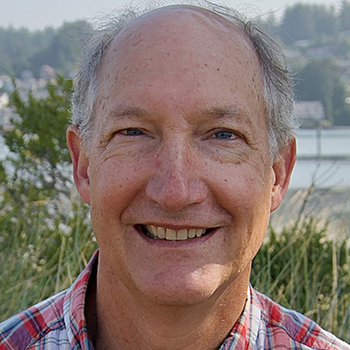
The U.S. National Science Foundation’s Ocean Observatories Initiative (OOI) is pleased to announce that Dr. Jack Barth, oceanographer and Professor of Oceanography at the Oregon State University’s (OSU) College of Earth, Ocean, and Atmospheric Sciences (CEOAS), has been recently appointed as the Principal Investigator for the OOI Cyberinfrastructure Data Center operated out of OSU.
Dr. Barth brings extensive expertise in coastal ocean dynamics, marine ecosystems, and hypoxia, with a research focus on the complex spatial and temporal variations of coastal circulation and water properties and their influence on marine ecosystems. A leader in high-resolution ocean observations, he has played a pivotal role in advancing ocean observing systems and dissemination of the data they produce.
With a Ph.D. in Oceanography from the Massachusetts Institute of Technology and Woods Hole Oceanographic Institution Joint Program, Dr. Barth has led numerous research initiatives resulting in over 140 scientific papers, mentored more than 20 graduate students and postdoctoral scholars. His research interests include high-resolution observations from the inner continental shelf to the adjacent deep ocean in an eastern boundary current upwelling system; influence of physical processes on the formation of low-oxygen (hypoxic) zones on the continental shelf; and the development of ocean observing systems.
Dr. Barth was involved in the genesis of the OOI, attending the first community meeting in 2004, then serving on the NSF Ocean Research Interactive Observatory Network (ORION) Executive Steering Committee from 2004-2007. He led the Request for Assistance that resulted in the OOI Coastal Endurance Array. Jack served as Project Scientist with the OSU Implementing Organization through the building and installation of the Endurance infrastructure before stepping aside to lead the Marine Studies Initiative at OSU. In his return to the OOI, Dr. Barth will promote the Data Center and the use of its open access data for scientific research, educational activities and public outreach. He will work closely with other members of the CI team to improve the quality, accessibility, and usefulness of the data for a wide range of projects conducted by the user community.
Dr. Barth continues to shape the field through policy and advisory roles, including his just-completed service on the Oregon Ocean Policy Advisory Council’s (OPAC) Scientific and Technical Advisory Committee. A Fellow of The Oceanography Society and the American Meteorological Society, Dr. Barth’s role as Principal Investigator of the OOI will further strengthen the initiative’s mission to advance ocean observing science and technology. His leadership and expertise will help drive new innovations and enhance our collective understanding of ocean systems to support scientific discovery.
[caption id="attachment_36197" align="alignnone" width="350"] (c): Oregon State University[/caption]
Read More Edson Represents OOI at POGO-26 Meeting in Malaysia
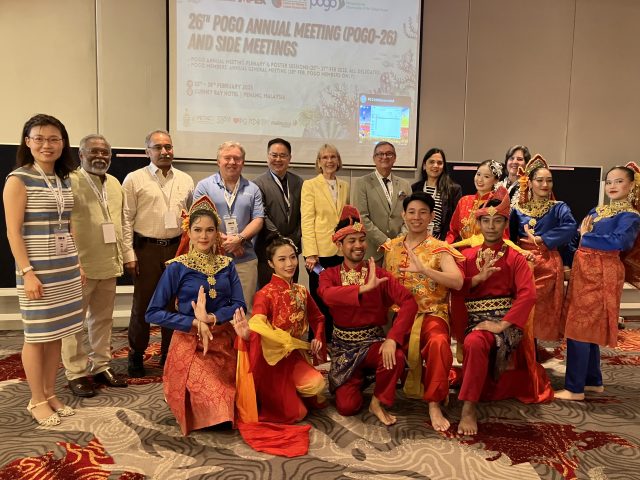
Jim Edson, Lead Principal Investigator of the NSF’s Ocean Observatories Initiative (OOI), recently attended the Partnership for Observation of the Global Ocean (POGO)-26 Meeting, held in Penang, Malaysia and hosted by the Centre for Marine and Coastal Studies (CEMACS). This international gathering brought together leading ocean researchers and policymakers to discuss issues and efforts in global ocean observation, capacity development, and outreach and advocacy.
The meeting covered a wide range of topics, including the role of blue carbon ecosystems in climate mitigation, biomolecular observations and environmental DNA (eDNA), sustainable ocean observation practices, digital twin technologies, marine heatwaves, and the far-reaching impacts of El Niño and La Niña on coastal and marine environments.
As part of the event, Edson participated in a panel discussion and delivered a presentation on the impact of El Niño and La Niña in the Northeast Pacific, drawing on a decade of Endurance Array data collected by OOI. His talk highlighted the importance of long-term oceanic datasets in understanding and predicting climate-driven changes in marine environments. The presentation sparked significant discussion among attendees, emphasizing the growing need for sustained ocean observations to improve forecasting, resource management, and climate resilience strategies.
Edson also provided an update on efforts to share metadata between the OOI and OceanSITES/OceanOPS. This effort will make the OOI surface mooring data more discoverable within this global network. This effort is led by the Coastal Global Scale Node (CGSN) team, which is conducting a pilot study using several methods to share the metadata. The OceanSITE component of this effort is supported by GOOS and represents a joint effort between the NSF, NOAA, POGO and GOOS.
By participating in POGO-26, Edson reinforced OOI’s role as a key contributor to global ocean monitoring efforts and OOI’s commitment to providing high-quality, long-term ocean data that can inform scientific research and decision-making worldwide.
[caption id="attachment_36143" align="alignnone" width="640"]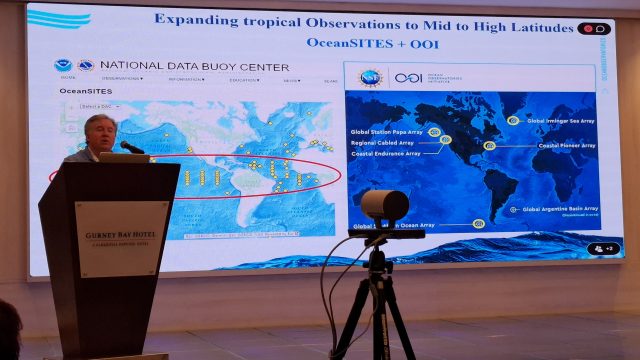 Jim Edson, OOI PI at presents at POGO-26[/caption]
[caption id="attachment_36144" align="alignnone" width="640"] POGO-26 in Penang, Malaysia[/caption]
Read More
Jim Edson, OOI PI at presents at POGO-26[/caption]
[caption id="attachment_36144" align="alignnone" width="640"] POGO-26 in Penang, Malaysia[/caption]
Read More Tagging and Tracking Large Fish Along the PNW Coast

A Navy-funded project is currently monitoring Pacific Salmon along the coasts of Oregon and Washington, using specialized tracking technology to better understand fish movements in near-real time. This effort, led by Dr. Taylor Chapple of Oregon State University, is part of the Marine Species Monitoring initiative, supported by the U.S. Navy Pacific Fleet.
While separate from the U.S. National Science Foundation’s Ocean Observatories Initiative (OOI) cruises, this project takes advantage of OOI’s Endurance Array moorings by placing Vemco VR2C tag readers on select moorings to detect and track tagged fish. The collected data provides valuable insights that could benefit commercial fishers, marine conservation efforts, and naval operations.
Tracking Salmon in Real-Time
As part of this initiative, researchers are tagging Pacific Salmon and tracking their movements using Vemco VR2C tag readers. These specialized instruments have been deployed on three OOI Endurance Array moorings: the Oregon Inshore Surface Mooring (CE01ISSM), the Washington Inshore Surface Mooring (CE06ISSM), and the Washington Shelf Surface Mooring (CE07SHSM).
When a tagged fish approaches one of these moorings, the tag reader records the encounter and transmits the data to shore within hours. This near-real-time data can be useful for commercial fishers, military operations, and other maritime stakeholders operating in the Pacific Northwest.
Expanding the Scope: Tracking Other Marine Life
Beyond salmon, the tag readers detect other marine species that have been tagged through separate research projects. These include sharks tagged from California to Alaska, sturgeon, other large fish, and even Dungeness crabs. The data collected from these detections is shared through OOI’s raw data server, contributing to a growing body of research on marine life movements in the region.
Data Access
To make the data easily available, each mooring with a tag reader generates a CSV file whenever it transmits data. These files have been combined into larger datasets, organized by mooring deployment, allowing researchers to analyze fish migration patterns and ecosystem dynamics.
By using OOI’s moorings for data collection, this project enhances our understanding of large fish movements along the Pacific Northwest coast, demonstrating the value of integrated ocean monitoring and advanced tagging technology.
To learn more and access the full dataset, visit the Tagging and Tracking of Large Fish Along the PNW Coast webpage.
Successful Underwater Surveys in the Mid-Atlantic Bight: OOI Team Deploys REMUS AUVs for Coastal Ocean Monitoring
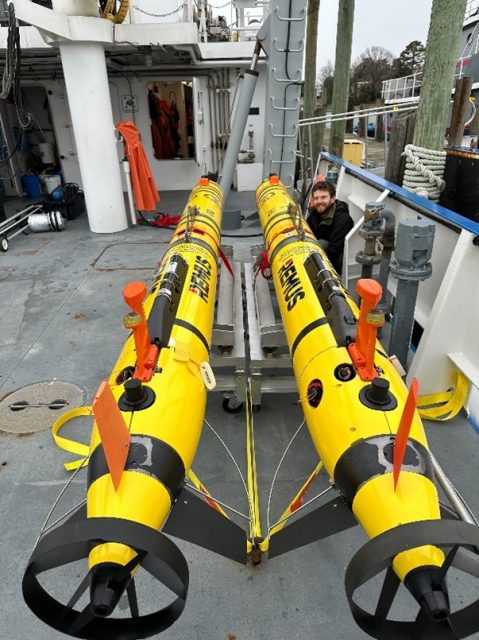
Taking advantage of a period of calm weather, OOI staff successfully completed underwater surveys of the Pioneer Mid-Atlantic Bight (MAB) shelf and upper slope using OOI REMUS AUVs. With ab underway speed of over 3 knots, the AUVs provide synoptic transects of rapidly changing coastal systems – analogous to repeated “snapshots” of the ocean physical, biological, and nutrient conditions across the shelf capturing changes that occur over short time and spatial scales (meters to kilometers, and hours to one day).
The OOI Pioneer array was relocated from the New England Shelf (NES) to the southern Mid-Atlantic Bight in April 2024. AUV surveys previously conducted in the continental shelf waters offshore of New England now take place offshore of the sandy Outer Banks of North Carolina in a new and highly dynamic part of the US continental shelf. Moving the Pioneer Array to the MAB naturally resulted in some changes to operations, foremost being the use of new vessels (for this cruise, the R/V Virginia operated by the Virginia Institute of Marine Science). For efficiency, the AUVs are shipped fully assembled inside a 20 ft shipping container, along with all communications, control, and deck equipment. On arrival everything can be hoisted aboard and prepared for sea without needing re-integration that consumes valuable days on shore (Fig 1). The ships crane was modified by WHOI engineer Jared Schwartz to install the Ship of Opportunity Launch and Recovery System (SOO-LARS), a modular hydraulic winch system that OOI employs for safe and efficient deployment and recovery of these large AUVs on ships of several classes (Fig. 2).
The AUV operations at MAB derive from previous work at Pioneer NES. Once deployed, the AUVs run autonomously and sample in a series of saw-tooth profiles along a pre-programmed track, remaining in acoustic contact with the support vessel and surfacing periodically to update exact location from GPS. These plans were adapted for the MAB to compensate for the larger expanse of shelf traversed and the large changes in water column density between the shallow (25 m) inner shelf and deeper > 500 m upper slope. This is further complicated by density variations along the shelf and seasonally under the triple-influence of estuarine outflows, continental shelf processes, and the Gulf Stream just a few miles beyond the offshore extent of the sampling region (Fig 3). The MAB is also busy with a range of commercial, fishing, and military vessel traffic, offshore fixed installations, and ocean life in every shape and size imaginable. All factors that must be considered in advance and avoided underway by the invisible submerged AUVs. As was true for Pioneer NES, the support and knowledge of local vessel operators is vital to supporting at-sea operations and for meeting OOI’s science mission objectives.
The AUV data were offloaded from the vehicles after recovery. The data are discoverable in the OOI Data Explorer, and also available on the OOI raw data repository, following data format conversion and sensor post-calibration.
In addition to completing two consecutive surveys, each about 24 hours in length, the at-sea team of Andy Robinson, Collin Dobson, and Natalia Moore completed the scheduled recovery of the Offshore Mesoscale glider cp_379 (Fig. 4). A bonus accomplishment of this cruise was cross-training OOI staff new to AUV operations (Moore), made easier by the prevailing mild weather, experienced AUV techs, and the capable ship’s crew.
[gallery columns="2" size="large" ids="35942,35943,35944,35945"]Photo credits: Collin Dobson
Read MoreCommunity Datasets: Advancing Research and Collaboration through OOI Data
The U.S. National Science Foundation’s Ocean Observatories Initiative (OOI) is committed to providing open-access oceanographic data to advance research and collaboration. The revamped Community Datasets page now compiles value-added datasets contributed by researchers, showcasing the diverse applications of OOI data in ocean science.
This page serves as a resource for researchers, educators, and data scientists, providing easy access to datasets shaped by the broader scientific community. By highlighting these datasets, OOI aims to foster collaboration and encourage new research opportunities.
The Community Datasets page features datasets derived from OOI data available at Oceanobservatories.org. The value-added datasets are created by the user community and hosted on platforms like NOAA’s NCEI, the Woods Hole Open Access Server, and Zenodo. These data sets, and associated metadata, can be accessed via Digital Object Identifiers (DOIs).
Datasets currently highlighted on the OOI Community Datasets webpage include:
- Camargo, C. M. L. (2024). Shelfbreak jet transport from OOI Pioneer.
DOI: 10.5281/zenodo.10814048 - Le Bras, Isabela (2023). Water temperature and salinity profiles from the OOI Global Irminger Sea Array Apex profiler mooring (2014-2020). NOAA National Centers for Environmental Information.
DOI: 25921/wzvr-fk49 - Lobert, Lukas, Gawarkiewicz, Glen G., Plueddemann, Albert J. (2023). Gridded hydrography and bulk air-sea interactions observed by the OOI Coastal Pioneer New England Shelf Mooring Array (2015-2022). Woods Hole Open Access Server.
DOI: 26025/1912/66379 - McRaven, L. (2021). Near-real-time CTD data from Irminger 8 cruise (August 2021). Ocean Observatories Initiative.
Retrieved from: https://oceanobservatories.org/2021/09/near-real-time-ctd-data-from-irminger-8-cruise-august-2021/ - McRaven, Leah (2022). Water temperature, salinity, and others taken by CTD and Niskin bottles from the research vessel Neil Armstrong (August 2021). NOAA National Centers for Environmental Information.
DOI: 25921/p8qe-me08 - Risien, Craig, Cervantes, Brandy, Fewings, Melanie, Barth, John, Kosro, P. Michael (2023). A Stitch in Time: Combining More than Two Decades of Mooring Data from the Central Oregon Shelf (v1.0).
DOI: 10.5281/zenodo.7582475 - Toole, John M., Musgrave, Ruth C., Fine, Elizabeth C., Steinberg, Jacob M., Krishfield, Richard A. (2023). Near-full-depth profile observations of water properties and currents at four deep-ocean sites. Woods Hole Open Access Server.
DOI: 26025/1912/66426 - Wilcock, William, Tolstoy, Maya, Waldhauser, Felix (2017). Catalogs of earthquakes recorded on Axial Seamount (January–November 2015). Marine Geoscience Data System (MGDS).
DOI: 1594/IEDA/323843
A key feature of this initiative is its community-driven approach. Researchers from diverse institutions have collaborated to compile and share these datasets, ensuring their broader impact. In addition to accessing datasets, researchers are encouraged to contribute their own derived datasets. Those interested in sharing their work can reach out to the OOI HelpDesk for support.
The Community Datasets page is a valuable resource for researchers, promoting data accessibility, collaboration, and scientific innovation. By sharing and expanding the use of OOI data, the community continues to drive groundbreaking discoveries in ocean science.
Explore the Community Datasets Page → https://oceanobservatories.org/community-data-tools/community-datasets/
Read MoreExploring Air-Sea Interactions at the AMS Annual Meeting
The Annual Meeting of the American Meteorological Society (AMS) is the largest national gathering for atmospheric scientists, drawing experts from various disciplines, including oceanography. This event serves as a key venue for advancing research and fostering collaborations across scientific communities.
AMS plays a critical role in disseminating oceanographic research through several journals, including the Bulletin of the AMS, Journal of Climate, Journal of Atmospheric and Oceanic Technology, and Journal of Physical Oceanography. These publications provide valuable platforms for cutting-edge studies in meteorology and oceanography.
A long-standing proponent of air-sea interaction research, the AMS supports this field through its dedicated Committee on Air-Sea Interaction. This committee organizes biennial research conferences at the annual meeting and frequently collaborates with other AMS committees to host joint sessions at these locations. Most recently, the Air-Sea Interaction Committee has expanded its collaborative efforts beyond AMS, partnering with the American Geophysical Union (AGU) to organize sessions at the Ocean Sciences Meeting.
At this year’s AMS Annual Meeting, the 24th Conference on Air-Sea Interaction was held in New Orleans, providing a platform for researchers to present their latest findings. James Edson, Principal Investigator of the Ocean Observatories Initiative (OOI), and Ben Barr, Postdoctoral Investigator at Woods Hole Oceanographic Institution (WHOI), along with their colleagues gave two presentations investigating air-sea interaction in high winds and extreme environments using OOI data. Their talks included:
- 10.2 Edson and Barr: Improvements to the COARE Bulk Flux Algorithm under Extreme Wind and Wave Conditions using NSF OOI Data
- 10.5 Barr, Seo, Edson, Sauvage, and Clayson: Understanding and Constraining Interfacial and Sea Spray Heat Fluxes in High Winds Using Direct Covariance Heat Flux Observations
These presentations were met with significant enthusiasm, sparking in-depth discussions that extended well into the lunch break. The engagement and interest generated by these talks reflect the growing importance of high-quality observational data in advancing our understanding of air-sea interactions, particularly under extreme environmental conditions.
As research on air-sea interactions advances, events like the AMS Annual Meeting play a crucial role in driving progress in marine meteorology. By leveraging innovative observational tools and fostering interdisciplinary collaboration, scientists are set to make significant strides in understanding the complex dynamics at the interface of the ocean and atmosphere.
Read More2025 OOIFB Summer School on Acoustics: Applications Now Open
The Ocean Observatories Initiative Facility Board (OOIFB), funded by the U.S. National Science Foundation (NSF), is hosting the 2025 Summer School on Acoustics from July 14–18, 2025, at the University of Washington in Seattle, WA.
This five-day, in-person program will provide targeted lectures, hands-on tutorials, and practical exercises using real-world examples and NSF Ocean Observatories Initiative (OOI) data products. Participants will focus on accessing, analyzing, and interpreting acoustic data alongside complementary oceanographic datasets available through OOI.
By the end of the program, participants will have a deeper understanding of underwater sound propagation, passive and active acoustic instruments (e.g., hydrophones and echosounders) deployed through OOI, and the available datasets. They will also learn how to navigate OOI data portals, apply basic acoustic data processing methods, and explore how these data can support scientific research. The program also offers opportunities to connect with a professional network of researchers using OOI data.
There are no registration fees, and travel support is available for participants from U.S. institutions. For details on program requirements, eligibility, a draft agenda, and the application process, visit the OOIFB Summer School on Acoustics webpage.
Please share this opportunity with your colleagues and networks. For questions, contact Holly Morin (holly@ooifb.org).
Read MoreRegional Cabled Array Tracks Axial Seamount’s Impending Eruption
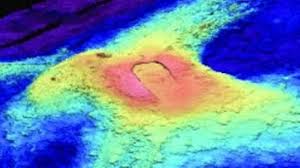
The Regional Cabled Array, a network of over 660 miles of undersea cables with more than 140 monitoring instruments, provides real-time data on the Axial Seamount, making it the most extensively studied undersea volcano. This system has detected magma reservoir inflation and increased seismic activity, key indicators that an eruption is likely before the end of 2025.
Read more from the Herald-Tribune.
Read More