OOI In The News
Lab Manager Magazine – OOI’s Cabled Array Brings the Ocean to Your Living Room, 24/7
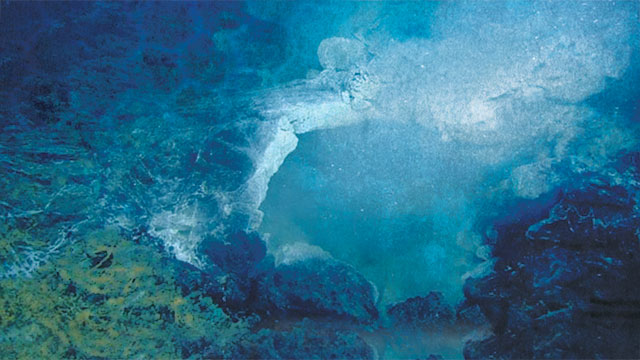
From Lab Manager Magazine (May 8, 2017): There’s a lot going on below the ocean waves off the coast of Oregon and Washington—activity most of us would miss if it weren’t for the Ocean Observatories Initiative’s (OOI’s) Cabled Array.
Read MoreWashington Post – A massive underwater volcanic eruption is captured in real time
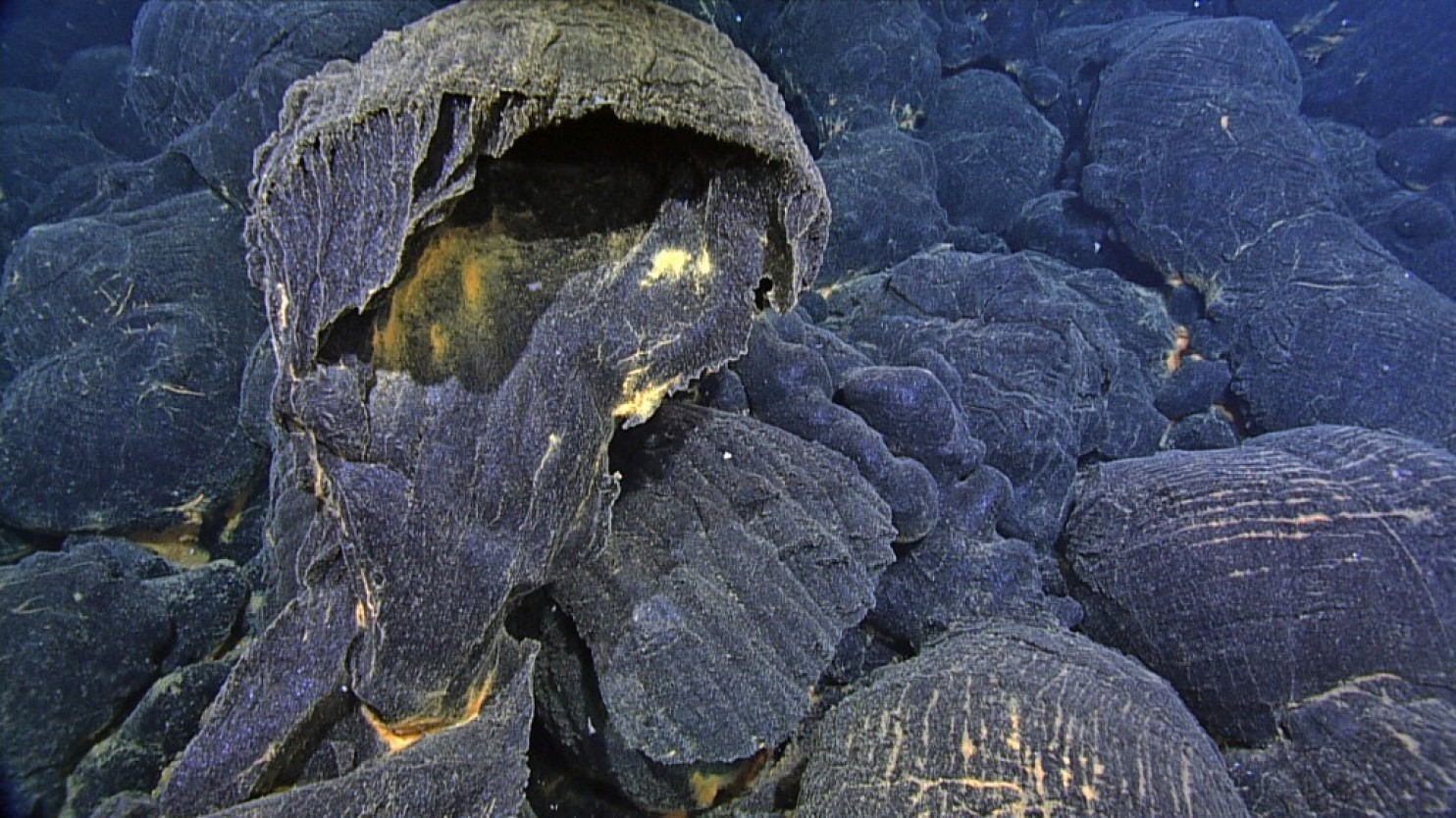
The sea floor split open on April 24, 2015, but scientists had seen it coming for months.
Read MoreEOS – Ocean Observatories Initiative Expands Coastal Ocean Research
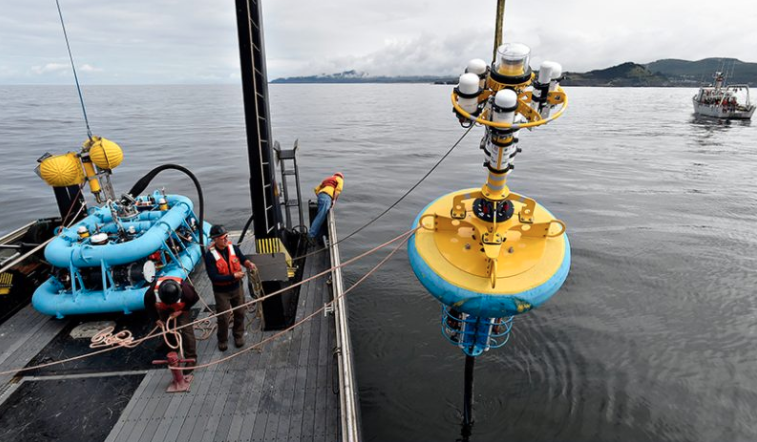
An Ocean Observatories Initiative (OOI) inshore surface mooring is deployed in June 2015 off the coast of Newport, Oreg., from Oregon State University’s (OSU) R/V Pacific Storm. In the background, a team on OSU’s R/V Elakha is deploying an OOI underwater glider. Photo Credit: Andy Cripe, Corvallis Gazette-Times
[/media-caption]
(From EOS, 97) By Robinson W. Fulweiler, Glen Gawakiewicz, and Kristen A. Davis
The coastal ocean provides critical services that yield both ecological and economic benefits. Its dynamic nature, however, makes it a most challenging environment to study. Recently, a better understanding of the coupled physical, chemical, geological, and biological processes that characterize the coastal ocean became more attainable.
Ocean Observatories Initiative systems were fully commissioned as of the end of 2015.
Last January, the Ocean Observatories Initiative (OOI), a program of the National Science Foundation (NSF), held a workshop in Washington, D. C., to acquaint potential users with the capabilities offered by the OOI systems, which were fully commissioned as of the end of 2015. A future workshop is planned for this fall on the West Coast.
OOI maintains two coastal ocean arrays: the Pioneer Array in the northwest Atlantic and the Endurance Array in the northeast Pacific. Each has a series of fixed moorings spanning the continental shelf, as well as mobile assets—underwater gliders and propeller-driven autonomous underwater vehicles.
Together, these observatories are capable of resolving coastal ocean processes across a range of temporal and spatial scales. Such data are critical for understanding nutrient and carbon cycling, controls on the abundance of marine organisms, and the effects of long-term warming and extreme weather events.
At the workshop, Jack Barth (Oregon State University) and Glen Gawarkiewicz (Woods Hole Oceanographic Institution) presented preliminary results of recent studies and data collection efforts, stressing the rapid, ongoing changes in coastal ocean temperatures in the U.S. West and East Coast shelf and slope systems. Other participants discussed connections between physics and water column nutrients, the temporal variability of key shelf currents, and the role of OOI data in assessing biodiversity.
A key outcome of the workshop was the introduction of the OOI data portal, where participants acquired firsthand experience in data querying, plotting, and downloading of OOI data. Additionally, participants had numerous opportunities to provide feedback to the OOI Cyber Infrastructure Team.
Anyone can sign up for an account to gain access to OOI data. These data are now available for plotting on the OOI data portal, and select data streams are also available. These sites will be updated with additional data and downloading formats as they become available.
OOI has entered a new phase of community engagement where scientists and educators are encouraged to use the data, provide feedback on data access ease and quality, and, in the process, expand our understanding of coastal oceans.
NSF program managers from all relevant disciplines expressed their support for the arrays. Additionally, we learned the details of how to submit proposals related to OOI data, and all the proposal submission information is available on the OOI website. Workshop participants also learned about the OOI education portal, which can bring cutting-edge ocean data and ocean science concepts to classrooms and informal science education sites.
The message from NSF was clear—OOI has entered a new phase of community engagement where scientists and educators are encouraged to use these data, provide feedback on data access ease and quality, and, in the process, expand our understanding of coastal oceans. A new era is approaching in which integrated ocean observatories will help stimulate innovative science and educational partnerships at the same time they enhance our ability to understand the changes occurring in our coastal oceans.
Jack Barth and Chris Edwards contributed to the writing of this summary. We thank NSF for sponsoring this workshop and the University-National Oceanographic Laboratory System for organizing the event, with a special thanks to Larry Atkinson and Annette DeSilva for their efforts. We also thank the workshop participants and the OOI Cyber Infrastructure Team for their continued work.
—Robinson W. Fulweiler, Department of Earth and Environment and Department of Biology, Boston University, Boston, Mass.; email: rwf@bu.edu; Glen Gawakiewicz, Woods Hole Oceanographic Institution, Woods Hole, Mass.; and Kristen A. Davis, Department of Civil and Environmental Engineering, University of California, Irvine
Citation: Fulweiler, R. W., G. Gawakiewicz, and K. A. Davis (2016), Ocean Observatories Initiative expands coastal ocean research, Eos, 97, doi:10.1029/2016EO054187. Published on 20 June 2016.
Read MoreNature Magazine, Vol 534
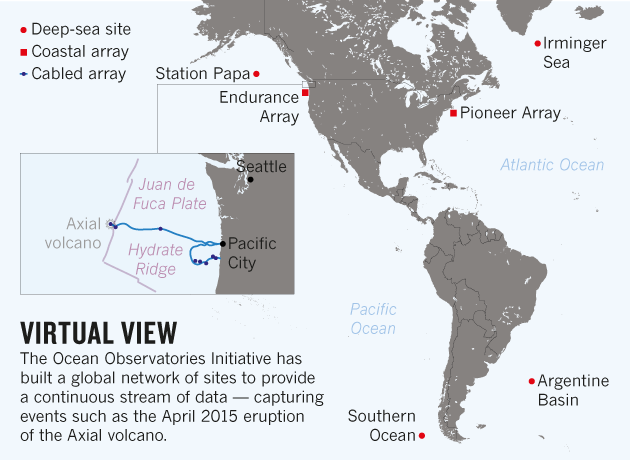
(From Nature Magazine / By Alexandra Witze) US ocean-observing project launches at last. Network of deep-water observatories streams data in real time.
[media-caption type="image" path="/wp-content/uploads/2016/06/nature-ocean-observatories-initiative-map-NEW-WEB-1.png" alt="from Nature Magazine (doi:10.1038/534159a)" link="#"]from Nature Magazine (doi:10.1038/534159a)[/media-caption]Nearly 10 years, US$386 million and many grey hairs after it got the go-ahead, an enormous US ocean-observing network is finally up and running.
On 6 June, the National Science Foundation (NSF) announced that most data are now flowing in real time from the Ocean Observatories Initiative (OOI), a collection of seven instrumented arrays. Oceanographers have the chance to test whether the technologically complex and scientifically unprecedented project will ultimately be worth it.
“It has been stressful,” says Richard Murray, the NSF’s director for ocean sciences. “It’s not for the faint-hearted.”
The raw data streams came online in April — months behind schedule, in part because of a 2014 switch between university subcontractors.
Through an open-records request, Nature obtained more than 1,200 pages of e-mails between project managers at the NSF and the Consortium for Ocean Leadership in Washington DC, which built the observatory. The records reveal an extraordinary level of tension throughout 2014 and into early 2015, as the final instruments were installed in the water and the contract for handling the data streams was switched from the University of California, San Diego, to Rutgers University in New Brunswick, New Jersey.
“Please excuse my display of stress in this email, but the InBox is overflowing with high-priority, short-fuse items — none of which deserve to be ignored — but all of which cannot be completed within the requested time frames,” Timothy Cowles, then programme director at the Consortium for Ocean Leadership, wrote to the NSF in January 2014.
The NSF cited cost overruns and performance delays in changing the cyberinfrastructure contract later that year. In April 2015, an underwater volcano laden with OOI instruments erupted, just as scientists had predicted — but the live data were not yet flowing to the wider scientific community.
Sea change
Now, about 85% of OOI data are available in real time on the project’s website, with the percentage growing every week, says Greg Ulses, the current programme director at the Consortium for Ocean Leadership. The information — on factors such as temperature and salinity — streams from more than 900 sensors at the 7 sites.
The OOI consists of one high-tech cable on the tectonically active sea floor of the northeast Pacific Ocean, together with two lines of oceanographic instruments — one off the US east coast and the other off the west coast — and four high-latitude sites, near Greenland, Alaska, Argentina and Chile. Each array involves a combination of instruments, from basic salinity sensors to sophisticated underwater gliders.
The NSF built the network as a community resource, hoping to stimulate an era of virtual oceanography in which scientists explore real-time data sets open to all.
“We know the data are valuable,” says Lisa Campbell, a biological oceanographer at Texas A&M University in College Station. “How to implement it is what we’re working on.”
Those involved in the OOI’s painful birth are happy to see it working at last. “When I finally got through and saw the real-time data, I shouted so loud someone had to come down the hall and close the door,” says Glen Gawarkiewicz, a physical oceanographer at the Woods Hole Oceanographic Institution in Massachusetts.
The array off the coast of Massachusetts has already captured some unprecedented observations, he says. In 2014, it measured air–sea fluxes when a hurricane passed overhead. The following winter, it measured dramatic shifts in the boundary at which shallow waters interact with deep ones. “That has tremendous practical implications, because there’s a lot of commercial fishing in that area,” Gawarkiewicz says. Using OOI data, he is now working with local fishers to share real-time information on changes in temperature and currents.
The west-coast array has studied a warm blob of water linked to weather patterns that are strengthening the ongoing drought in California. And in the North Atlantic, off the coast of Greenland, OOI scientists have coordinated their measurements with those of others, such as an international programme to measure heat flow in this key region. “These are high-scientific-value sites that we have dreamed about, and now we have occupied them,” says Robert Weller, a physical oceanographer at the Woods Hole Oceanographic Institution.
….
[button link="http://www.nature.com/news/us-ocean-observing-project-launches-at-last-1.20031"]Read Full Article[/button]
Nature 534, 159–160 (09 June 2016) doi:10.1038/534159a
Read MoreOOI Highlighted in Secretary Kerry’s Remarks at Our Ocean 2015 Conference
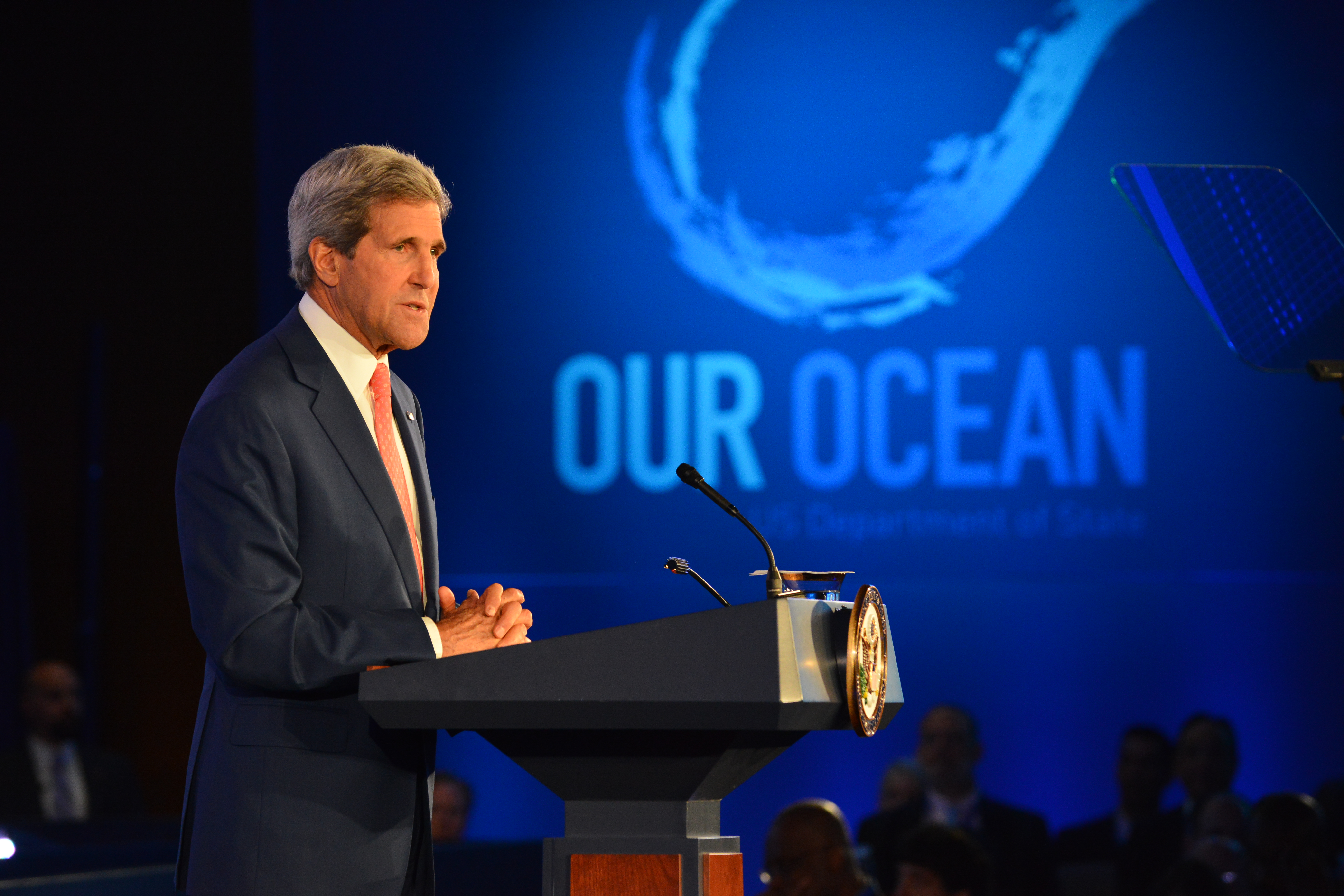
The second annual Our Ocean 2015 Conference was held in in Valparaiso, Chile on October 5-6, 2015.
This year, more than 400 leaders dedicated to protecting the ocean participated in the conference with the goal for each to commit to concrete actions to protect ocean areas and marine resources.
Secretary of State John Kerry gave opening remarks at the conference alongside of the Minister of Foreign Affairs of Chile, Heraldo Munoz and the President of Chile, Michelle Bachelet. In his opening remarks, Secretary Kerry highlighted the Ocean Observatories Initiative (OOI) as one of the United States projects committed to preserving the ocean. He pointed out that not only is the OOI important in terms of its breadth of the infrastructure, but also in its’accessibility to the public: “[W]e’ll be putting all of the information that we collect online – much of it in real time – so that the public or anybody who wants to can better understand ocean acidification and other changes taking place – and ultimately, better address and adapt to them.”
<!– The below links no longer work from state.gov
Click here for to read the transcript of the Secretary Kerry’s Speech
Click here for the list of actions the United States has committed to to protect the ocean
–>
The Plan To Create A ‘Fitbit For The Oceans’
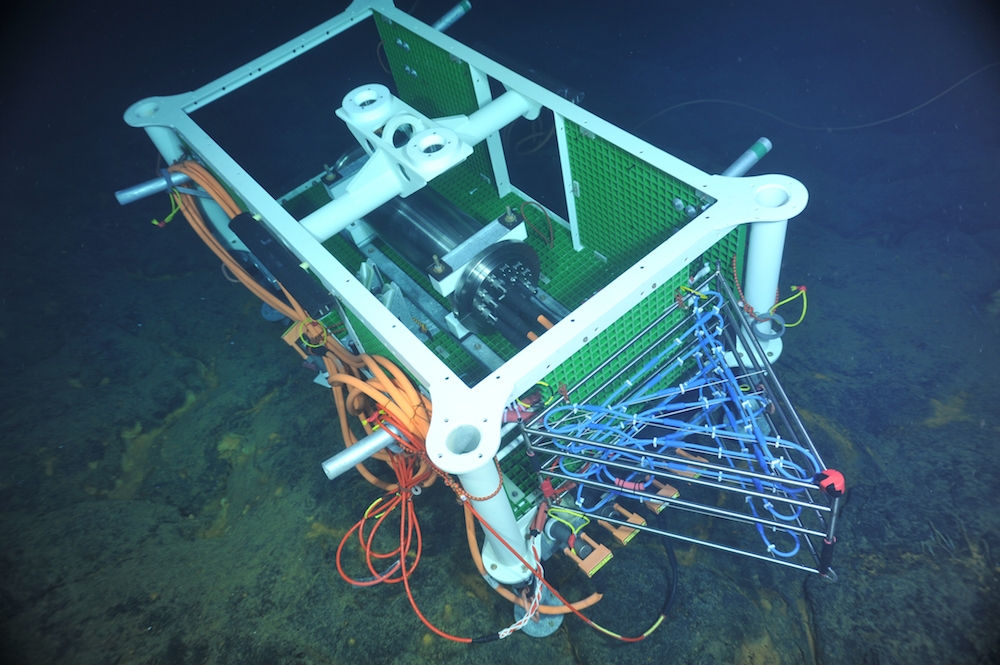
This fall, an integrated infrastructure of sensor systems will sprawl, swim, and anchor itself across our oceans as part of the Oceans Observatories Initiative, a project 10 years in the making.
Read MoreStudents, Researchers at Sea Working on Recently Erupted Deep-Sea Volcano
When an underwater volcano erupted in April off the Oregon coast, researchers knew within minutes that something spectacular was happening more than 300 miles offshore.
Read MorePBS News Hour – The Challenges of Wiring up at Undersea Volcano
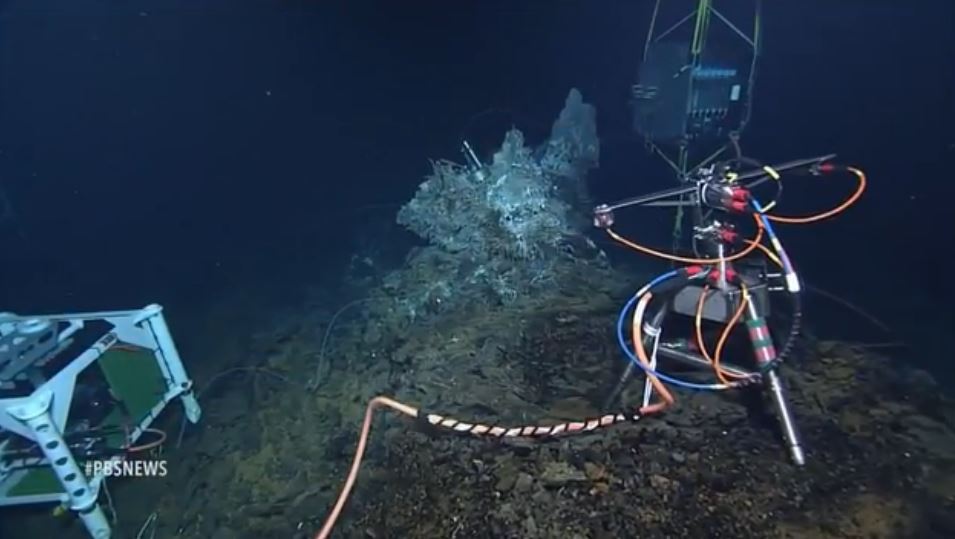
The OOI Cabled Array was profiled in a PBS News Hour video July 7th. Check out the video here with interviews from OOI scientists and deep sea footage.
Read MoreThe Oregonian – OSU drops final ocean buoy off Newport, OR
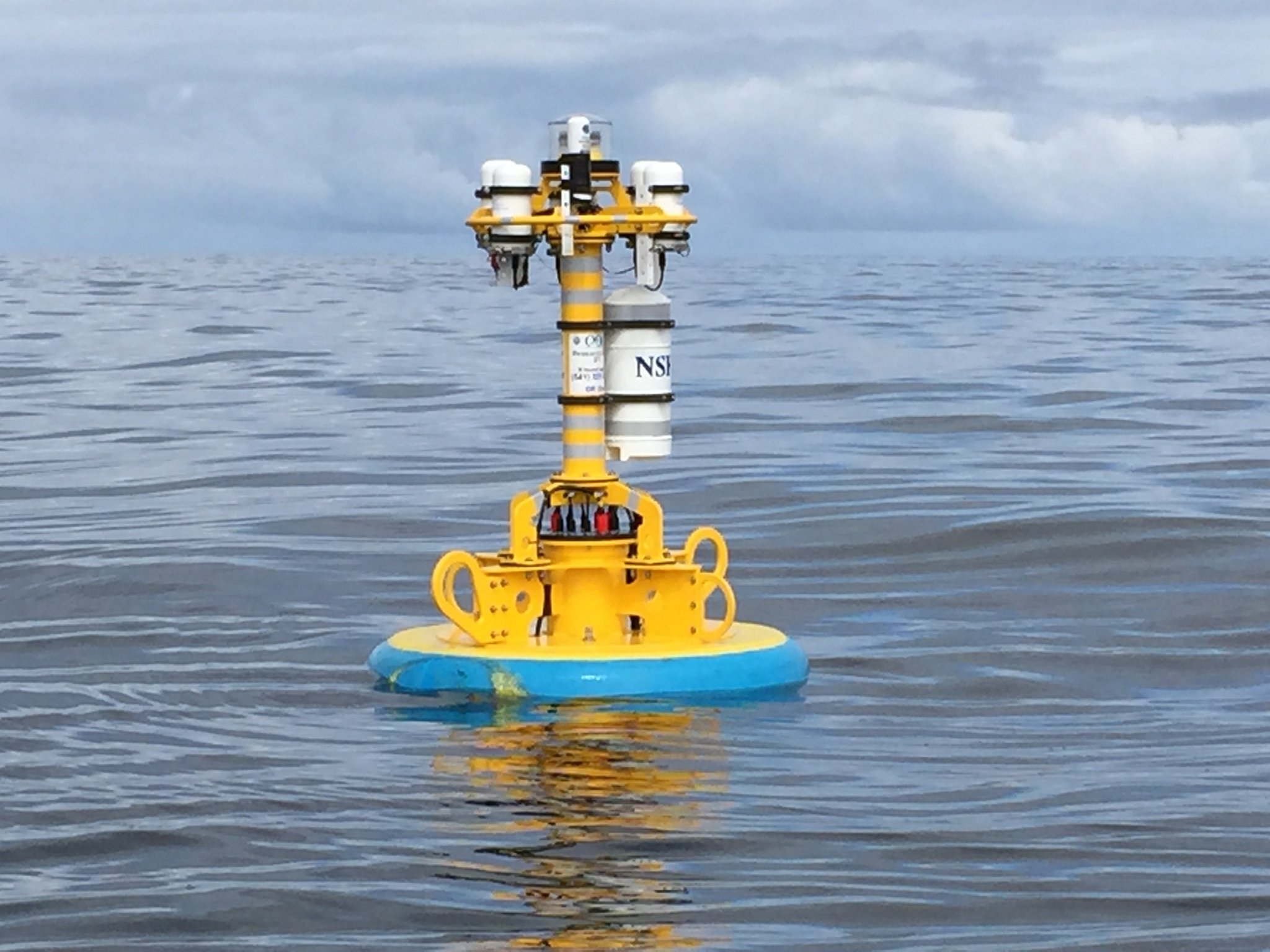
Researchers from Oregon State University hit the Pacific waters Tuesday to drop the area’s final piece of a more than 10-year initiative.
Read MoreOregon Public Broadcasting – Oregon Scientists Lead Underwater Research
OOI Endurance Array Project Manager, Ed Dever, and Project Scientist Jack Barth were interviewed on the Oregon Public Broadcasting program Think Out Loud last week.
Read More